About this item
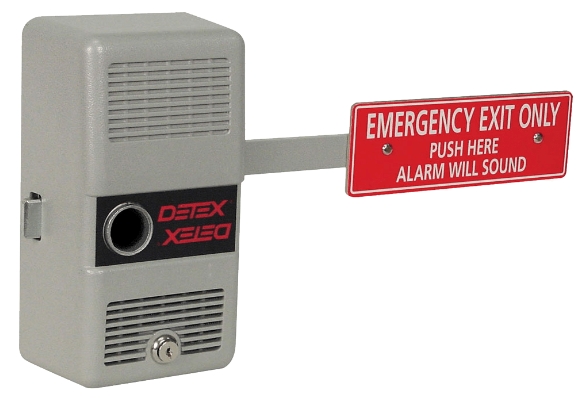
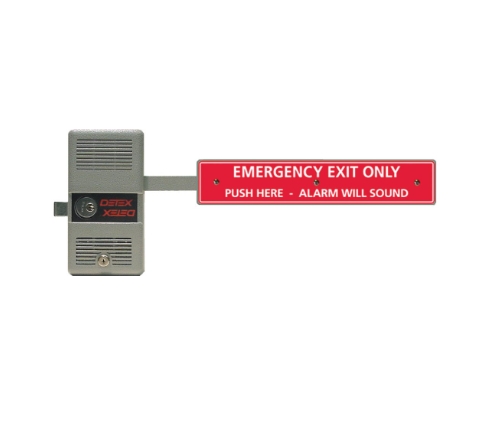
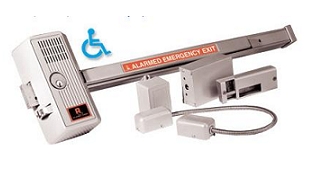
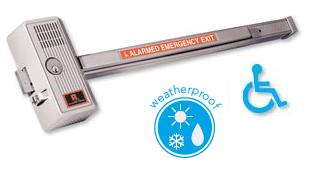
The Alarm Lock 715 Sirenlock is a delayed egress panic alarm device - a self-contained surface-mount exit door system that provides a mandatory 15-second delay with instant 95dB alarm before allowing egress through a secured door, while permitting immediate exit during a fire or life safety emergency. If you searched "alarm lock 715", "delayed egress door", "715 alarm", "delayed egress device", or "alarm lock exit door alarm mortise horn 11in.h" - this is the product.
"Alarm Lock Exit Door Alarm Mortise Horn 11in.h": What This Search Means
If you searched "alarm lock exit door alarm mortise horn 11in.h" - this is a product description fragment, the kind that appears on a spec sheet, a distributor catalog cut sheet, or a hardware schedule line item. The 715 is the Alarm Lock alarmed exit device with a dual piezo horn alarm element. The 11-inch height dimension refers to the die-cast control box assembly. This search is from a specifier or facilities manager reading directly from a product description or installation document and searching the exact text. The Alarm Lock 715 is the product.
What Delayed Egress Actually Is: Step by Step
Every competitor page says "15-second delayed egress" but none of them explain the mechanical and alarm sequence. Here is the complete operation:
Normal unauthorized exit attempt: Someone approaches the door and depresses the push bar. The moment the bar is depressed, the 95dB dual piezo alarm sounds immediately - before the door moves at all. The deadlatch holds the door closed. For 15 full seconds, the alarm sounds and the door does not open. After 15 seconds have elapsed, the deadlatch releases and the door can be opened. The deadbolt must be manually relocked with a key - the device does not auto-relock after the delay expires.
Emergency exit (fire alarm or smoke detector signal): When the device receives a signal from the building's fire alarm panel, a supervised automatic fire detection system, or connected smoke detectors, the delay is bypassed entirely. The door releases instantly. No 15-second wait, no alarm required. This is the NFPA 101 life safety requirement: a delayed egress device must release immediately on any fire alarm signal.
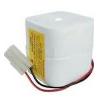
Power failure: A power interruption to the 715 does not cause the door to unlock and does not affect the delayed egress function. The standard 9V alkaline battery backup (included) operates the unit through approximately 200 alarm sequences or seven continuous hours of alarm. The delay still functions on battery power.
NFPA 101 Life Safety Code: What This Means for Installation
The 715 meets NFPA 101 Life Safety Code - the National Fire Protection Association standard governing emergency egress from buildings. This compliance is not automatic on installation. NFPA 101 requires that a delayed egress device be connected to an approved supervised automatic fire-detection system or sprinkler system that will automatically unlatch the lock instantly in the event of an emergency.
This means the 715 must be wired to the building's fire alarm panel or connected to smoke detectors using the device's smoke detector input. A stand-alone installation without fire system connection does not comply with NFPA 101, regardless of the product's code-compliant design.
Before installing any delayed egress device, confirm requirements with the Local Authority Having Jurisdiction (LAHJ). Different jurisdictions interpret NFPA 101 and local building codes differently. Life safety requirements must be confirmed locally before installation.
The 715 includes self-adhesive warning labels required by NFPA 101 - these must be affixed to the door as part of a compliant installation.
Dual Deadbolt and Deadlatch: Two-Bolt Security
The 715 features both a deadbolt and a deadlatch - a distinction no competitor page explains.
The deadbolt (1-inch throw, stainless steel with rotating steel inserts) is the primary security bolt. It is set by turning the rim cylinder from inside. The rotating steel inserts in the bolt are designed to spin freely when a saw blade contacts them during a cutting attack - the same anti-saw principle as on high-security deadbolts. Arming the deadbolt is what activates the 15-second delay and alarm sequence.
The deadlatch is the spring-loaded auxiliary latch with a deadlocking pin - the same anti-loiding feature seen on Adams Rite and other commercial deadlatches. The deadlatch is what physically holds the door closed during the 15-second countdown after the bar is depressed and the alarm sounds. Even with the alarm sounding, the deadlatch cannot be pushed back with a card, knife, or shimming tool during the delay period.
Monitoring Output and Smoke Detector Input
The 715 includes a monitoring output terminal - a dry contact output that activates when the device alarms. This output can simultaneously drive a secondary remote siren, trigger a CCTV camera to begin recording, signal a remote monitoring console or security desk, or feed any access control panel input. One device triggers multiple responses across the security system simultaneously.
The smoke detector input accepts connection from the building's existing fire alarm control panel (FACP) or from standalone smoke detectors powered directly from the 715. The smoke detector input triggers the instant egress override - when smoke is detected, the door releases without delay.
Alarm Modes: Continuous vs Two-Minute Shutdown
The 715 offers two selectable alarm modes:
Continuous: The 95dB dual piezo siren sounds continuously from the moment the bar is depressed until a key is used to reset the device. The door cannot be re-armed without a key reset.
Two-minute shutdown: The siren sounds for two minutes and then silences automatically. The device remains in the tripped state - the door is unlocked - but the alarm stops after two minutes. Used in applications where continuous alarm is disruptive to nearby occupied spaces after the initial alert period.
In both modes, the door must be manually relocked with a rim cylinder key regardless of alarm behavior.
Equipment Included with the 715
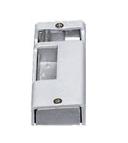
The complete kit that ships with every Alarm Lock 715 includes: lock assembly with 9V alkaline backup battery, single-door keeper assembly, push bar assembly (33-inch or 48-inch bar), control box assembly, Model 271 flexible armored door loop with two covers (the power transfer cable discussed on the separate 271 product page), power transformer (12VAC, 20VA), 5-conductor cable 10 feet, and NFPA 101 self-adhesive warning labels.
Not included: 1-1/8-inch rim cylinder for arming. One rim cylinder is required for inside key control to arm and disarm the deadbolt. A second rim cylinder is required for outside key control. Both are ordered separately - add rim cylinder option at checkout.
Specifications
Model: Alarm Lock 715X28X88 (33" bar) / 715X28X88X48 (48" bar)
Delay: 15 seconds - the only delay period available on the 715
Alarm: 95dB dual piezo horn, instant on bar depression
Alarm Modes: Continuous or automatic 2-minute shutdown (selectable)
Bolts: 1-inch deadbolt with rotating steel inserts + deadlatch
Arming: 1-1/8" rim cylinder (not included) - required
NFPA 101: Compliant - must be connected to supervised fire detection system
Smoke Detector Input: Existing FACP or standalone smoke detectors
Monitoring Output: CCTV, secondary siren, remote monitoring
Low Battery: Audible indication
Armed Indicator: Visual LED on control box
Battery Backup: 9V alkaline - 200 alarm sequences or 7 hours continuous
Power: 12VAC, 20VA transformer (included)
Power Failure: Door does not unlock; delay function maintained
Bar Sizes: 33" and 48"
Finish: Satin aluminum (US28)
Handing: Non-handed
Includes: 271 armored door loop, power transformer, 5-conductor cable, warning labels
American Locksets has stocked Alarm Lock delayed egress devices since 2001.
 Trusted Since 2001


.svg)