 Trusted Since 2001


.svg)
- Keypad/Prox Locks
- Electronic Keypad/Proximity Lock
- Best Electronic Keypad Locks
Best Electronic Keypad Locks
$1,910.00
$1,337.00
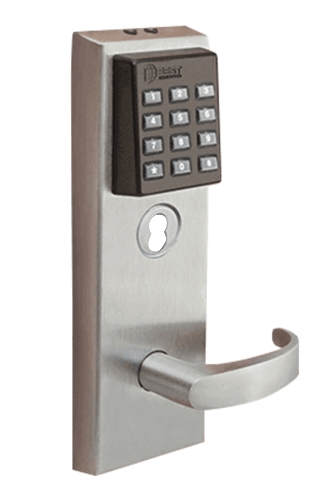
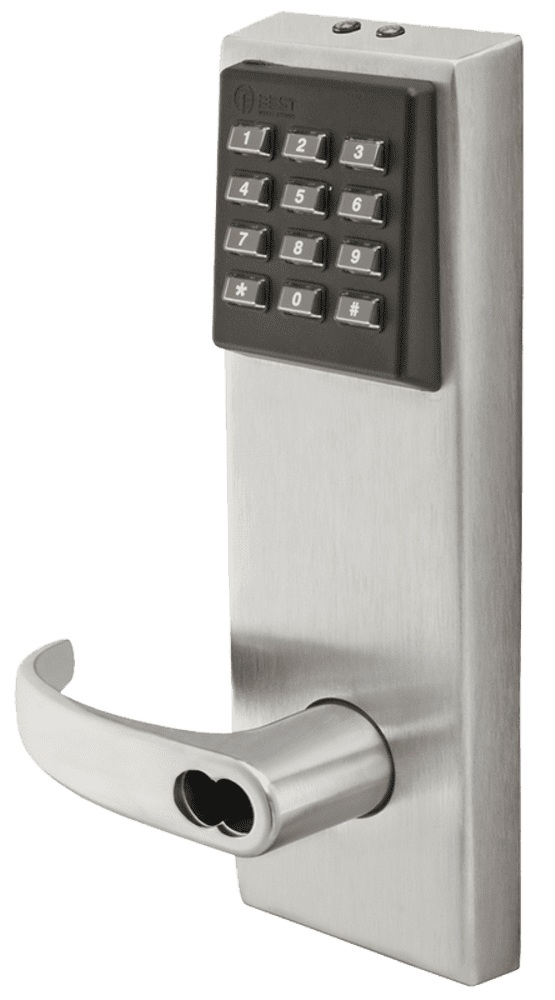
Electronic keypad locks replace the physical key with a PIN entered on the door. Nobody can copy a code the way they copy a key, losing it isn't a problem, and you never have to rekey when someone leaves. For commercial and institutional doors, that convenience buys you something mechanical locks can't: control. You decide who gets a code, you change it in seconds, and on the right hardware you can see exactly who opened the door and when.
American Locksets stocks electronic keypad locks built for doors that get used hard every day. That ranges from BEST keypad lever locks with interchangeable cores to Alarm Lock Trilogy locks with full audit-trail capability. Everything ships same day, with free shipping on orders over $300.
What makes an electronic keypad lock the right choice
A standalone electronic keypad lock runs on battery power and stores its codes on the lock itself. There's no wiring to run, no control panel to install, and no monthly software fee. You program codes at the keypad or through a small handheld or PC tool, and the lock handles the rest. That makes it the practical middle ground between a simple mechanical pushbutton lock and a fully networked access control system.
You'll want an electronic keypad lock over a mechanical one when any of these matter to you:
You need to know who came and went. Electronic locks can log every entry, every failed attempt, and every code change with a date and time stamp. A mechanical lock can't tell you anything.
You hand out and revoke access often. Adding a code for a new hire and deleting it the day someone leaves takes seconds, with no locksmith visit and no rekeying.
You want scheduled or temporary access. Many electronic locks let you set codes that only work during certain hours or that expire on a set date, which is ideal for contractors, cleaners, and short-term staff.
How to choose the best electronic keypad lock for your door
Match the lock to the door and the way the door gets used. A few questions sort it out fast.
How many users and how much tracking? A small office with a handful of staff needs far less than a school wing or a storage facility tracking access to restricted areas. Higher user counts and audit requirements point you toward a Trilogy-class lock that stores thousands of codes and tens of thousands of audit events.
Lever or mortise? Cylindrical lever locks suit most standard commercial doors and install quickly. Mortise locks go into doors prepped for a mortise case and carry higher security ratings for heavier-traffic or higher-security openings.
Do you run interchangeable cores? If your facility is on a BEST or SFIC key system, a keypad lock with an interchangeable-core housing lets you keep keyed override on the same key system you already manage. That's why BEST keypad levers are a common specification in facilities already standardized on BEST cores.
Standalone or networked later? If you might move to centralized access control down the road, choosing a lock family that offers a networked version (like Alarm Lock's Networx line) lets you start standalone and add wireless management without replacing the hardware.
Standalone electronic keypad vs. networked access control
A standalone keypad lock keeps everything on the door. It's the right call for most individual openings where you need keyless access and basic control without the cost and complexity of a system. A networked or wireless online lock communicates with a central panel, pushes credentials in near real time, and supports building-wide lockdown. If you only need a few doors handled, standalone wins on cost and simplicity. If you're managing access across a building and need central control, that's a different conversation, and our team can help you scope it. Call 877-471-4870 before you order.
Electronic keypad locks vs. mechanical pushbutton locks
If audit trails and remote management don't matter and you simply want keyless access that never needs a battery, a mechanical pushbutton lock may serve you better and cost less to own over time. We cover that trade-off in depth in our guide to mechanical pushbutton vs electronic keypad locks, and you can browse both types under Keypad/Prox Locks. For most doors that need tracking or frequent code changes, electronic is the answer. For a stairwell or electrical room that just needs reliable keyless entry, mechanical often is.
Brands we stock
Our electronic keypad selection includes BEST electronic keypad lever and mortise locks for facilities on a BEST or SFIC key system, and Alarm Lock Trilogy DL, PDL, and T2 series locks for doors that need audit-trail capability and high code capacity. For the full range of electronic keypad, proximity, and pushbutton hardware, see the complete Keypad/Prox Locks category. If you're managing credentials on commercial Schlage hardware, see the Schlage AD & CO Series locks as well.
Already have a lock and need to manage codes? Our guides walk through how to change the code on a Schlage lock and how to program an Alarm Lock Trilogy step by step.
Frequently asked questions
What is an electronic keypad lock? An electronic keypad lock is a battery-powered lock that opens when a user enters a PIN on the keypad instead of using a key. Codes are stored on the lock, and many models log entries and let you add or delete codes in seconds.
What is the difference between an electronic keypad lock and a smart lock? A keypad lock opens with a PIN and stores codes on the lock itself. A smart lock adds connectivity, usually Wi-Fi or Bluetooth, so you can manage it from an app. Many commercial keypad locks are intentionally offline for reliability and security.
Do electronic keypad locks keep an audit trail? Higher-end models do. An Alarm Lock Trilogy, for example, logs thousands of time-stamped events including entries, failed attempts, and code changes, which you download with a handheld tool or PC software. Basic keypad locks do not log activity.
How many user codes can an electronic keypad lock hold? It varies widely by model. Simple locks hold a handful of codes, while audit-trail locks like the Trilogy DL series store up to 2,000 user codes. Check the specific product for its capacity.
Can I use an electronic keypad lock with my existing key system? Yes, if you choose a model with an interchangeable-core housing that matches your key system. BEST electronic keypad locks accept BEST and compatible SFIC cores, so you can keep keyed override on the same key system you already manage.
Are electronic keypad locks good for commercial doors? Yes. Commercial-grade electronic keypad locks are built for heavy daily use and offer keyless access, fast code management, and on many models an audit trail, which is why they're widely specified in offices, schools, healthcare, and storage facilities.
What happens to an electronic keypad lock when the battery dies? Most commercial keypad locks warn you with a low-battery indicator well in advance, and many include a keyed override cylinder so you can still get in. Use fresh alkaline batteries, not rechargeables, which run at a lower voltage and can cause erratic behavior.