About this item
The apartment function exists because dormitory and apartment doors have a specific security requirement that standard entrance and storeroom functions can't satisfy: the door needs to stay locked from outside even after the occupant exits. When a tenant or resident leaves their room, they pull the door closed behind them and it should remain secured. The next person approaching from the corridor still needs a key. The ML2065 dormitory/entrance function (ANSI F13) doesn't do that: turning the inside lever on an ML2065 unlocks the outside lever. The ML2067 (ANSI F20) does: turning the inside lever retracts the latch and deadbolt for egress, but the outside lever remains locked. The door closes and stays locked without any additional step from the departing occupant.
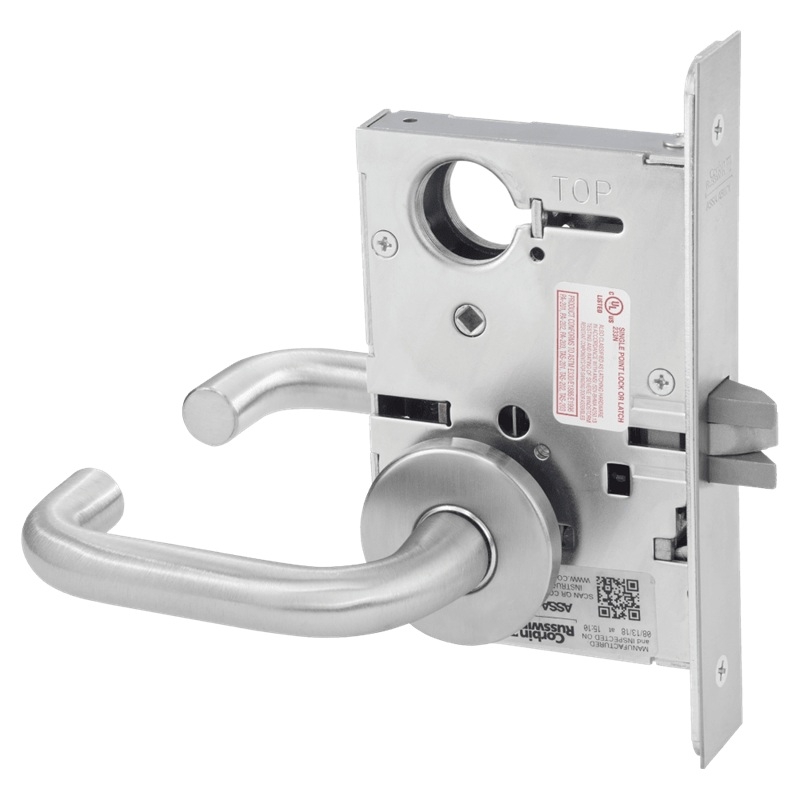
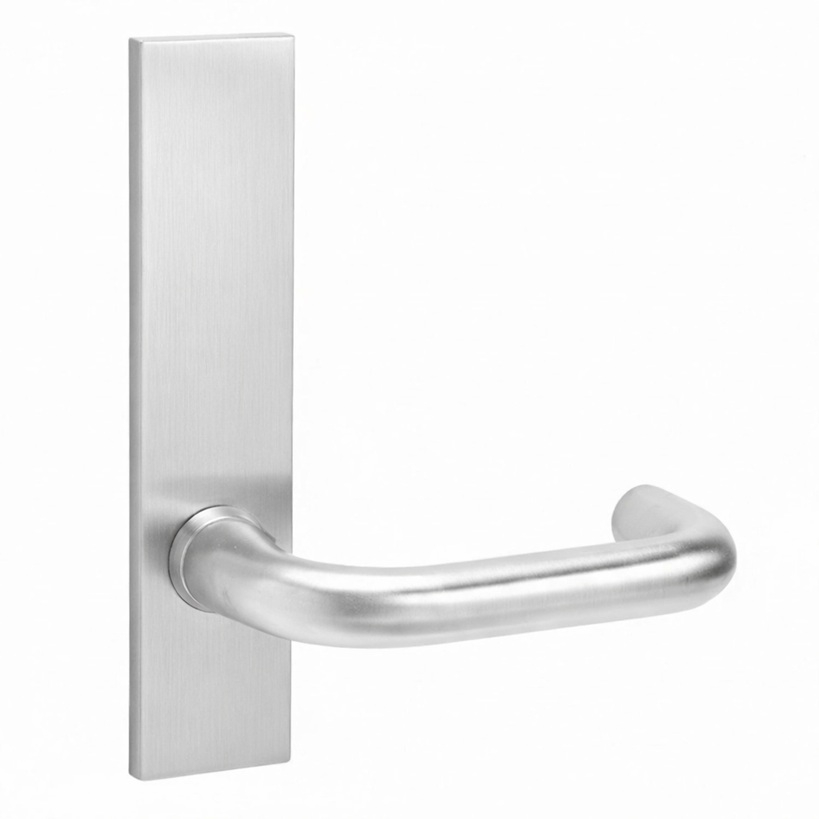
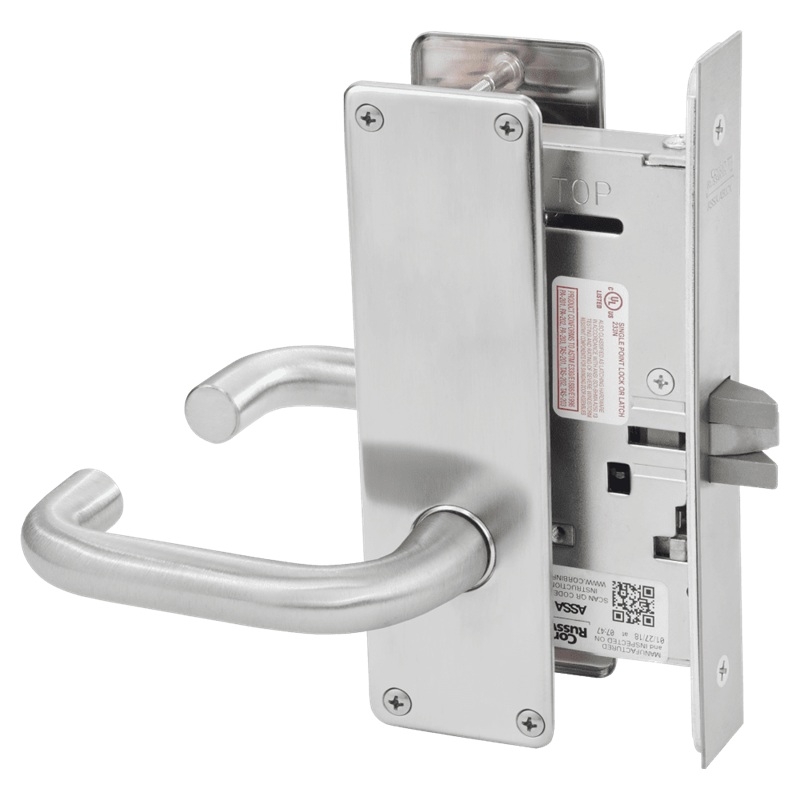
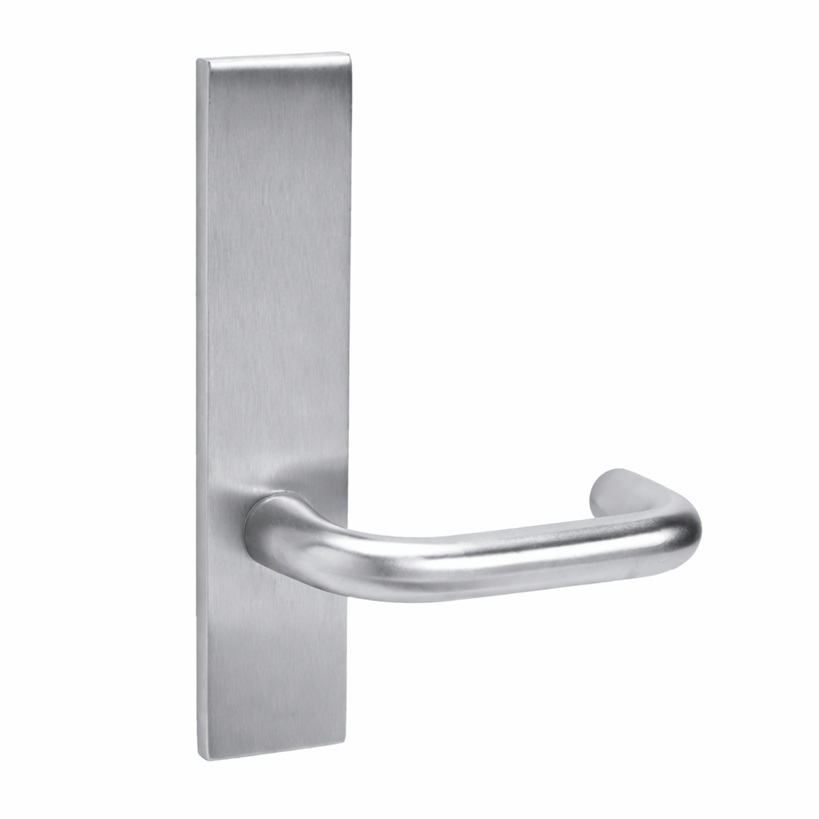
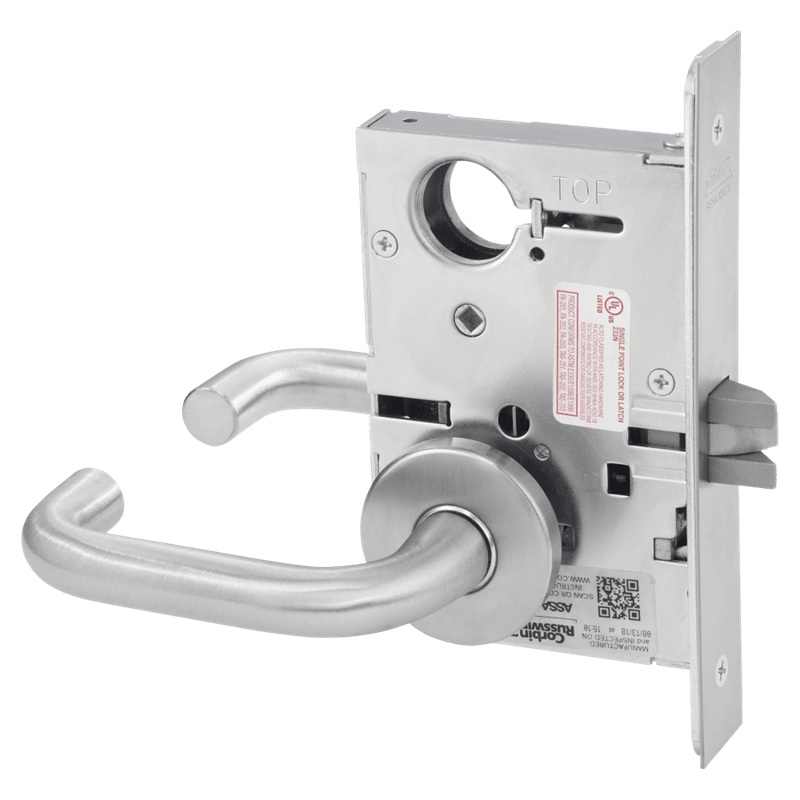
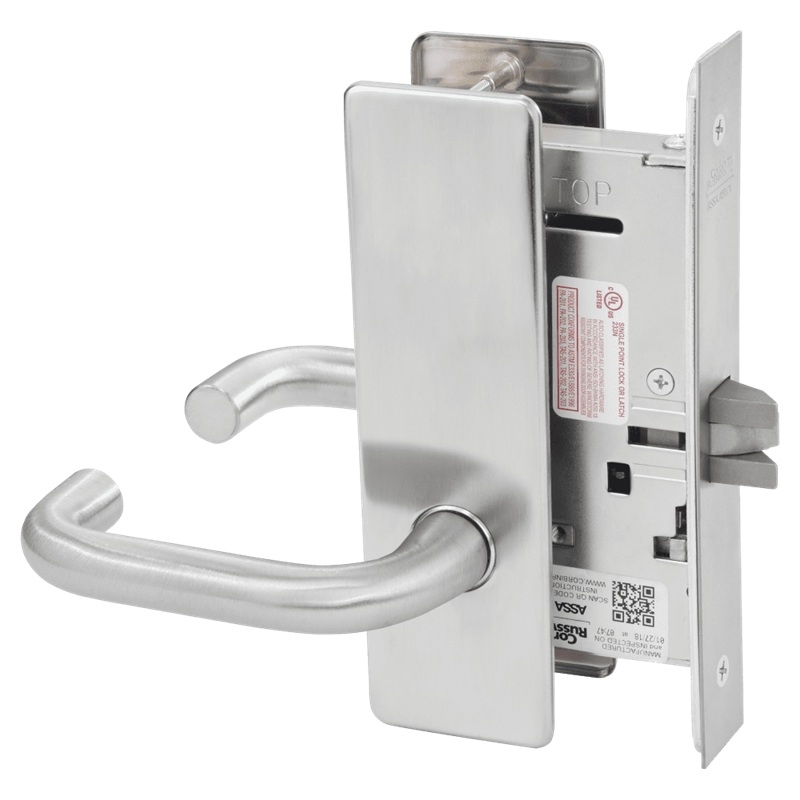
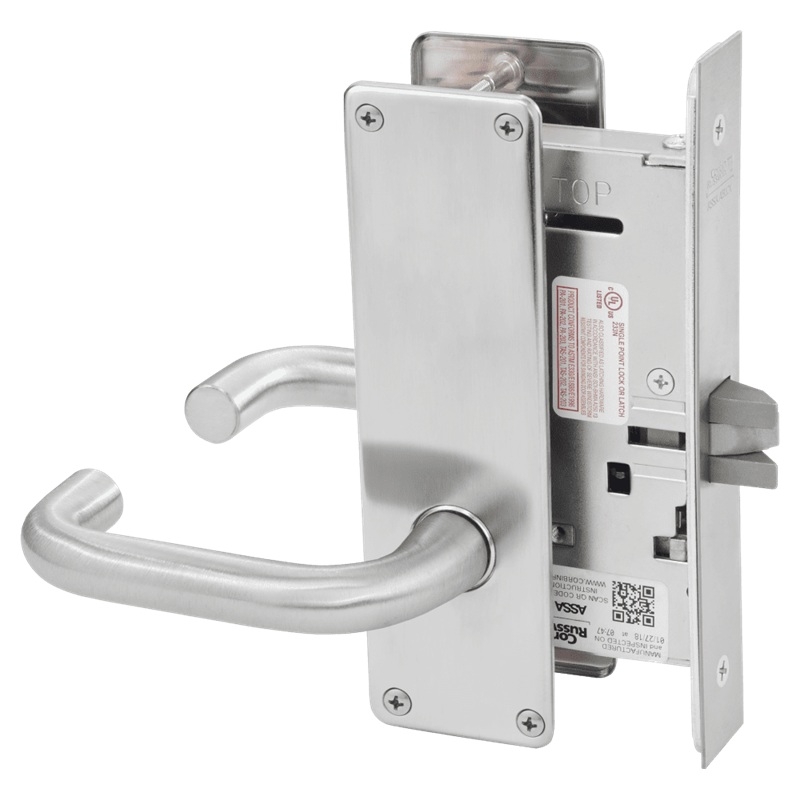
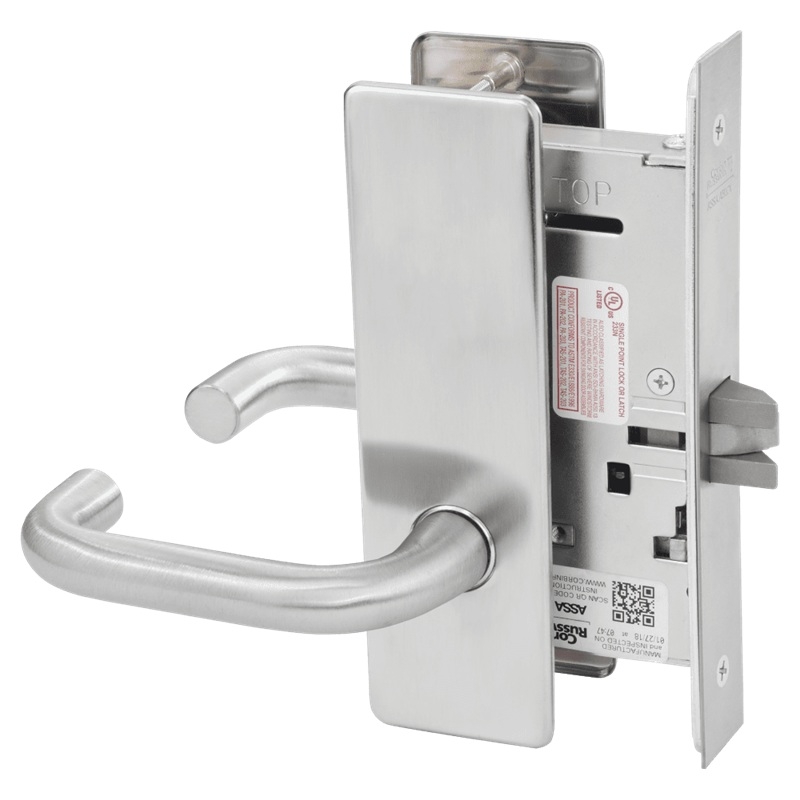
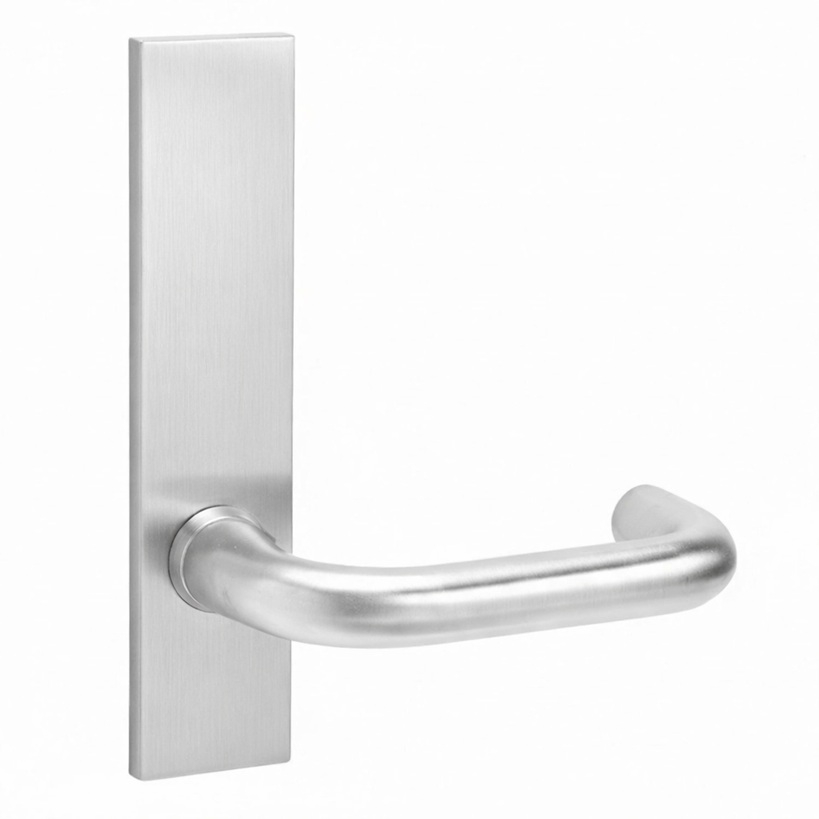
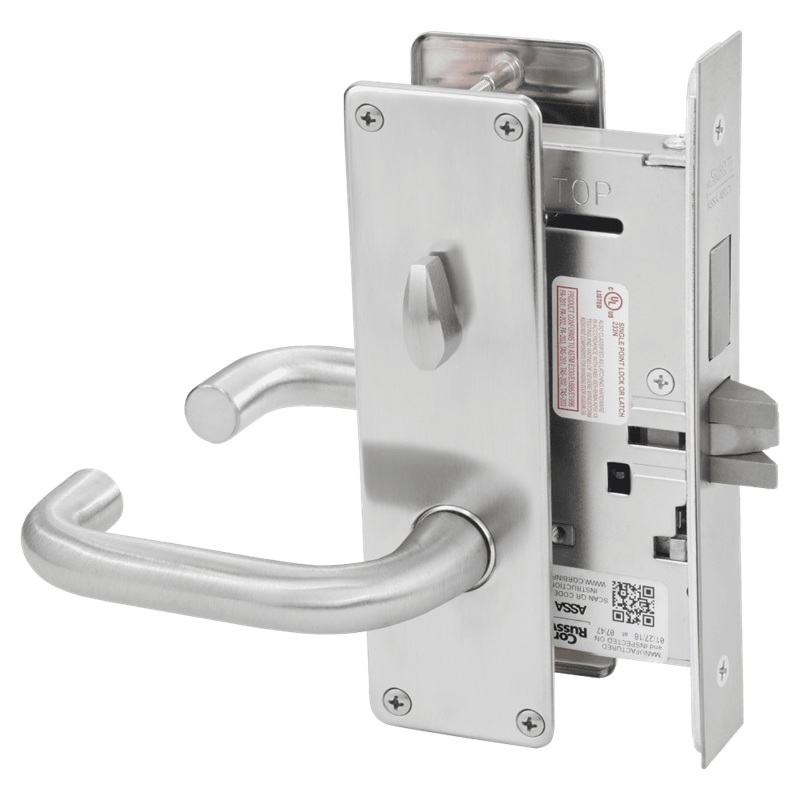
The ML2067 LWA puts the ANSI F20 apartment function in the ML2000 Grade 1 lockcase with the Lustra Wide (LW) lever on the standard A rose in 626 Satin Chrome. For the complete Corbin Russwin ML2000 Series, browse our Corbin Russwin lever locks catalog. For all commercial mortise locks, view our mortise locks catalog.
ANSI F20 Apartment Function: Four Operating States
The ML2067 has four distinct operating states that give occupants full control over their own security.
State one, free passage: Neither the toggle stop nor the deadbolt is engaged. Both inside and outside levers operate the latch freely. The door functions like a standard passage lock. Occupants and guests enter and exit freely.
State two, toggle locked: The occupant presses the inside toggle-action stop. The outside lever locks rigid. The inside lever remains free for egress but turns the latch and deadbolt independently, and the outside lever stays locked after egress. The toggle stop is the only thing that unlocks the outside lever from inside. A key from outside can retract the deadbolt but the outside lever stays locked.
State three, deadbolt locked: The occupant turns the inside thumbturn to throw the deadbolt. The outside lever locks rigid via the projected deadbolt. Inside lever is always free for egress: turning it retracts both the latch and deadbolt simultaneously, but the outside lever remains locked. A key from outside can retract the deadbolt for entry.
State four, egress with locked outside lever: In either toggle or deadbolt locked state, the inside lever retracts latch and deadbolt for exit. The door closes. Outside lever is still locked. The corridor-side approach still requires a key or toggle release from inside.
Corbin Russwin ML2067 LWA Technical Specifications
Series: Corbin Russwin ML2000. Function: ML2067, Apartment or Dormitory, ANSI F20. Trim: LWA, LW Lever (Lustra Wide), A Rose. Grade: Grade 1. SKU: ML2067 LWA 626. Toggle-action stop: Yes, inside; independently locks outside lever. Door thickness: 1-3/4" (44mm) standard. Backset: 2-3/4" (70mm). Handing: Quick reversible without disassembling lock case. Lockcase: Heavy-gauge chrome plated steel, 5-7/8" x 4" x 15/16" (149mm x 102mm x 24mm). Front: Heavy-gauge steel, 8" x 1-1/4" x 3/32"; optional D138 wide for 1-3/8" doors. Latchbolt: 2-piece with anti-friction insert, 5/8" x 1" x 3/4" throw (19mm). Auxiliary latchbolt: 9/16" effective throw, 3/8" effective deadlocking. Deadbolt: One-piece stainless steel, 19/32" x 1-1/4" x 1" throw (25mm). Strike: ANSI straight lip, 4-7/8" x 1-1/4" x 1-1/8" lip to center; optional strikes available. Cylinder: Brass, 6-pin, L4 keyway standard; 7-pin optional; IC available. Thumbturn: inside deadbolt throw/retraction. Keys: Two nickel silver standard. Keying: KD standard; Keyed Alike; Master Keyed; Construction Master Keying. Finishes: 605, 606, 612, 613, 625, 626, 630, 722. Warranty: 10-year limited.
ML2067 vs. ML2065: Choosing Between F20 and F13
Both functions are specified as "dormitory" in architectural schedules, which creates frequent specifying confusion. The distinction is what happens when the inside lever is turned.
ML2065 (ANSI F13, Dormitory/Entrance): Inside lever rotation simultaneously retracts latch and deadbolt AND unlocks the outside lever. The door can be entered freely from outside after egress until the deadbolt is thrown again.
ML2067 (ANSI F20, Apartment/Dormitory): Inside lever rotation retracts latch and deadbolt for egress but outside lever remains locked. Corridor-side access still requires a key even after the occupant exits.
If you're specifying for apartment units or university dorms, the ML2067 is the right call. Tenants leave, the door locks behind them, and the next person approaching from the corridor still needs a key. That's the behavior residential security requires. For hotels, private offices, or any space where staff need the door to open freely after someone exits, the ML2065 fits that situation instead.
 Trusted Since 2001


.svg)