About this item
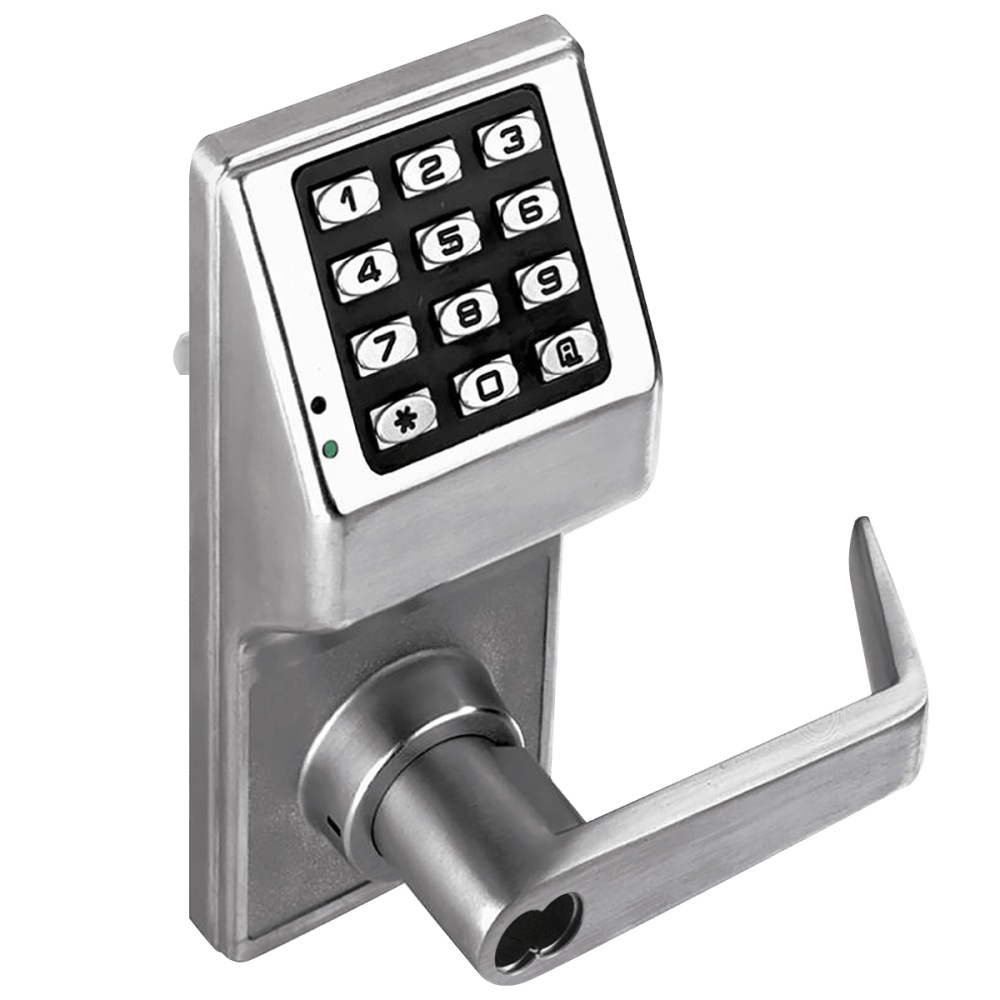
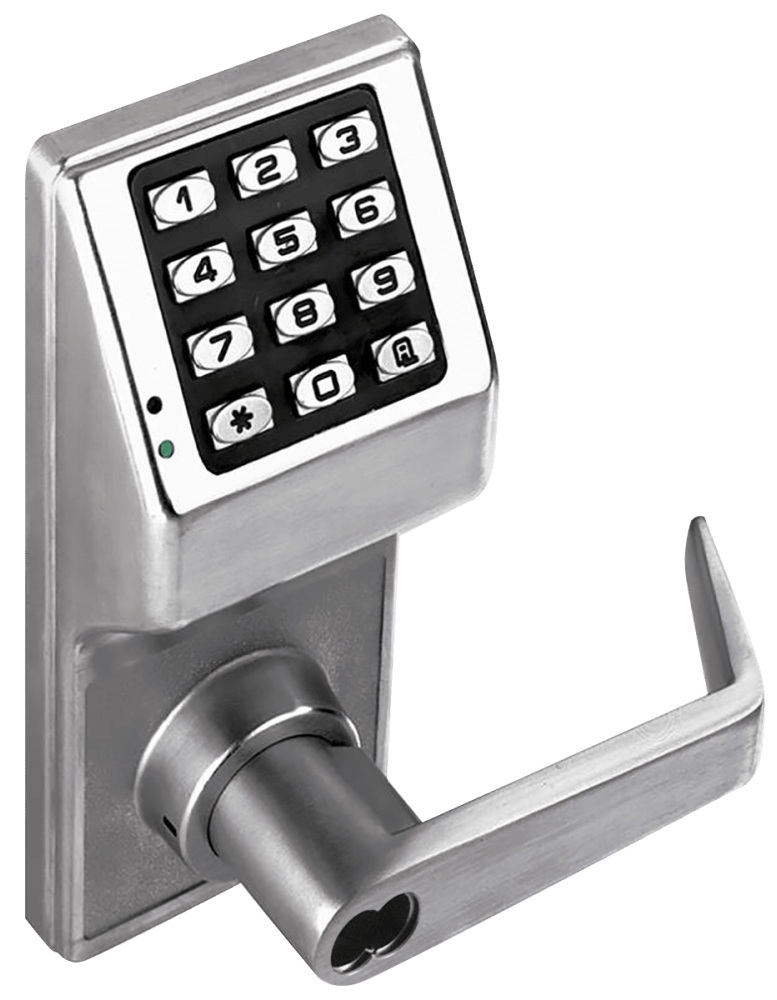
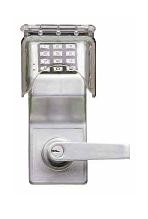
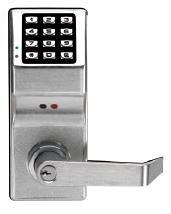
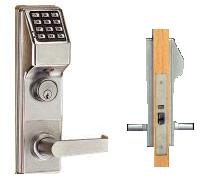
The Alarm Lock Trilogy DL4100-26D is the T3 Series standalone digital cylindrical lock with privacy pushbutton, residency feature, 2,000 user codes, 40,000-event audit trail, and 500 scheduled events -in satin chrome finish. If you searched "trilogy dl4100", "dl4100", "dl 4100", "alarm lock dl4100", "trilogy dl4100 manual", or "dl4100 programming" -this is the product.
DL4100 vs DL2700: Why the Upgrade Matters
The DL2700 (T2 tier) is the right lock when 100 keypad-managed user codes with no audit trail and no scheduling is sufficient -small offices, rental properties, retail spaces. The DL4100 (T3 tier) is specified when the facility requires any of the following: an audit trail of who entered and when, timed access schedules, more than 100 users, a privacy/occupied indicator for single-occupancy spaces, or PC software management.
If your application is a commercial restroom, on-call room, fitting room, darkroom, healthcare sleeping room, confidential file room, or any single-occupancy space where you need to know whether the room is occupied and who has been entering, the DL4100 is the correct specification. The DL2700 cannot do any of this.
The Privacy Feature: Step by Step
Every competitor page mentions the privacy pushbutton but none explain the exact sequence -which is what every "dl4100 programming" and "trilogy dl4100 manual" searcher is looking for.
Activating privacy: The inside door face of the DL4100 has a pushbutton on the interior lock body. When someone inside the room presses this button, the lock immediately enters privacy mode. In privacy mode, no keypad code from the outside will retract the latch. The outside keypad accepts entries but does not release the lock. Even a time-schedule that would normally keep the lock in free access mode is suspended during a privacy session.
Visual indication while in privacy: The red LED on the outside (keypad side) of the door flashes to indicate the room is occupied. Anyone approaching the door sees the flashing red LED before trying to enter -eliminating door rattling, unwanted interruptions, and awkward encounters. The inside housing also has an LED indicating the privacy session is active from the occupant's side.
Exiting privacy mode -from inside: The inside lever always provides instant egress -turning it retracts the latch and exits the room. When the inside lever is turned, the privacy session ends automatically and the lock returns to normal operating mode.
Override from outside: Master codes and all management codes (up to 11 total) can bypass the privacy lockout from outside at any time. A lockdown override code can also be programmed to allow authorized staff to bypass privacy mode instantly -the specific use case is a classroom where students activate the privacy button and staff need to regain entry. This is why the DL4100 is specified for school classrooms as a lockdown-capable lock: one button activates privacy/lockdown from inside, and authorized staff can override from outside without tools or special hardware.
Residency Feature: What It Does and Why It Matters
The residency feature is the second unique function of the DL4100 and the detail most competitor pages list without explaining.
Without residency: Every time an occupant exits the room and the door closes, the lock re-engages. The next time they return, they need their code again. In a restroom, on-call room, or any space where the occupant steps out briefly and returns, this creates repeated code-entry friction.
With residency mode: The occupant exits through the inside lever without code entry. The door closes behind them. The lock remains in an unlocked state for a programmed time period. When the occupant returns before the residency timer expires, the door opens without a code. The lock re-engages after the timed residency session expires or is manually reset.
Residency is the correct mode for on-call sleeping rooms in hospitals, executive lounges, and any space where the occupant makes frequent brief exits during an occupied period.
"Trilogy DL4100 Manual" and "DL4100 Programming": Three Programming Paths
If you searched "trilogy dl4100 manual" or "dl4100 programming" -the DL4100 supports three programming methods, and choosing the right one changes the time investment significantly:
Keypad programming: All functions accessible through the all-metal 12-button keypad using code sequences -no computer required. Adding users, setting schedules, configuring privacy behavior, adjusting entry time (3, 10, or 15 seconds after code entry). Sufficient for small deployments. The DL-Windows manual is downloadable from Alarm Lock's website at alarmlock.com.
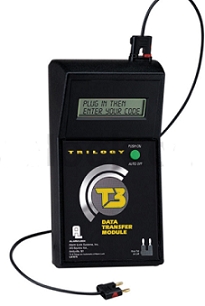
AL-DTMIII Data Transfer Module: A handheld device that connects to the lock and transfers programming data from a PC to the lock, and extracts the audit trail from the lock to the PC, without a cable connection at the door. Correct for multi-lock facilities where someone walks lock to lock with the module rather than running cables. The AL-DTMIII can program up to 96 locks in a single session.
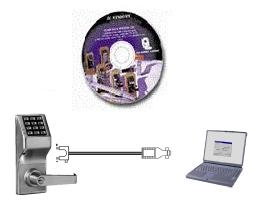
DL-Windows PC Software: Alarm Lock's Windows-based management software that creates user databases, programs schedules, and generates printable audit trail reports. Required for the full 500-schedule capacity and the 40,000-event audit trail reporting. PC interface cable (AL-PCI2) required and sold separately. DL4100 requires DL-Windows version 3.02 or higher.
Audit trail access options: AL-DTMIII module, AL-PCI2 PC interface cable, or AL-IR1 handheld infrared printer for on-site printing without a computer.
2,000 Users, 40,000 Audit Trail, 500 Schedules
The capacity jump from the DL2700 (100 codes, no trail) to the DL4100 is substantial:
2,000 user codes -3 to 6 digit PINs. Code hierarchy includes master, manager, supervisor, and basic user tiers, plus one-time entry service codes.
40,000-event audit trail -Every entry, exit, failed attempt, privacy activation, and schedule change is logged with date, time, and user code identifier. Real-time clock accurate to 1 second. Exportable via AL-DTMIII or PC.
500 scheduled events -Including 4 "quick schedules" for the four most common time schedules in one programming step. Time schedules control when the lock is in free access, locked, or code-required mode without manual intervention.
Temporary keypad lockout: After 3 consecutive invalid code entries, the keypad locks out for a programmed time period -preventing brute-force code guessing attacks.
Specifications
Model: Alarm Lock Trilogy DL4100-26D
Series: Trilogy T3 standalone digital cylindrical lock
Finish: US26D / 26D -Satin chrome
Grade: BHMA Grade 1
Privacy Feature: Interior pushbutton locks outside keypad -override by master/management codes
Residency Feature: Timed exit-and-return without re-code
Exterior Indicator: Flashing red LED when privacy session active
Interior Indicator: LED confirms privacy session
User Codes: 2,000 PIN (3-6 digits) -master, manager, supervisor, basic user, one-time codes
Audit Trail: 40,000 events with date/time/user stamp
Scheduled Events: 500 (includes 4 quick schedules)
Real-Time Clock: Yes -accurate to 1 second
Failed Attempt Lockout: After 3 invalid entries
Programming: Keypad, AL-DTMIII module, DL-Windows PC software (v3.02+)
Audit Retrieval: AL-DTMIII, AL-PCI2 PC interface, AL-IR1 infrared printer
Entry Time: 3, 10, or 15 seconds (selectable)
Power: 5 AA alkaline batteries, approx. 60,000 cycles
Weatherproof: Yes --31°F to +151°F
Key Override: 6-pin solid brass cylinder, SC1 keyway, included
Backset: 2-3/4" standard; 2-3/8" available
Door Thickness: 1-5/8" to 1-7/8"
Latchbolt: 1/2" solid brass, deadlocking, UL listed, 3-hour fire rated
Handing: Non-handed, field reversible
Compliances: BHMA Grade 1, UL 10C, FCC certified, ADA compliant
American Locksets has stocked Alarm Lock Trilogy locks since 2001.
 Trusted Since 2001


.svg)