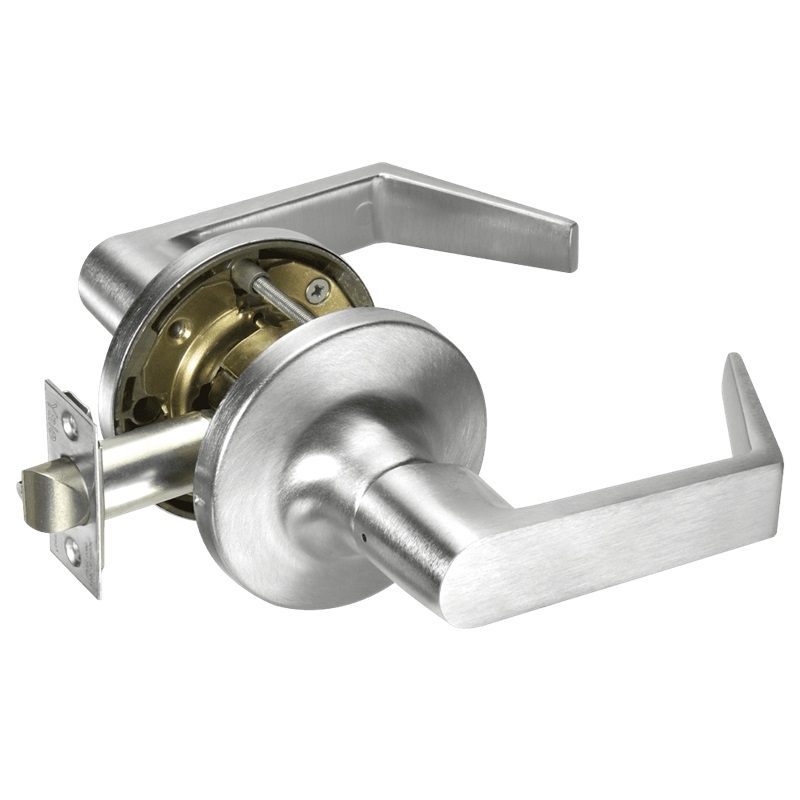
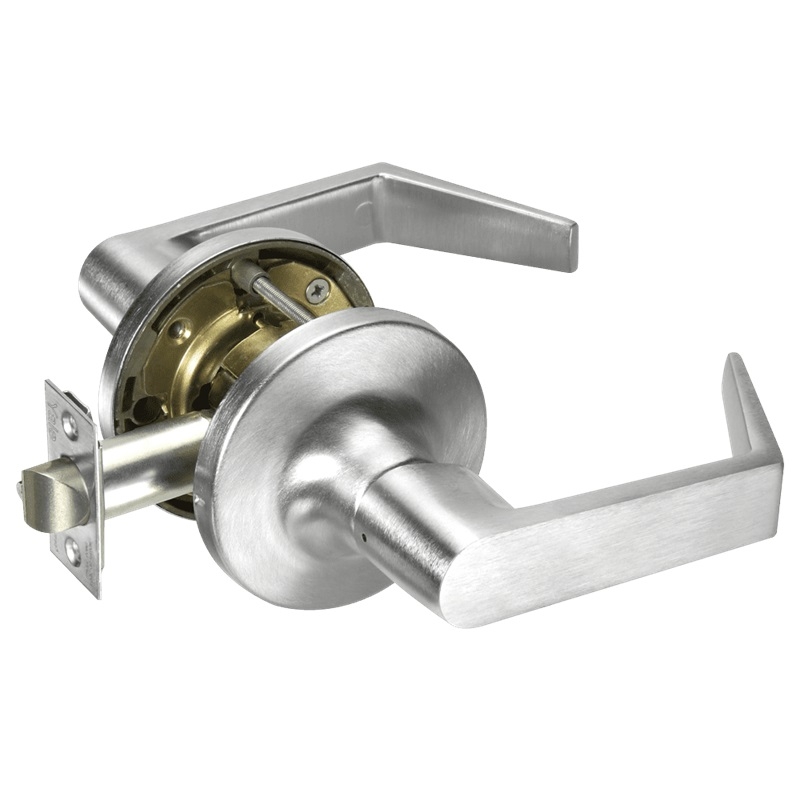
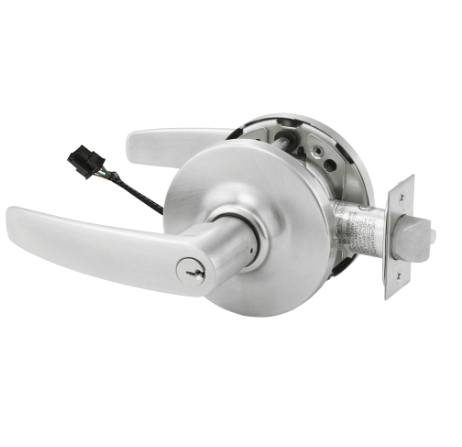
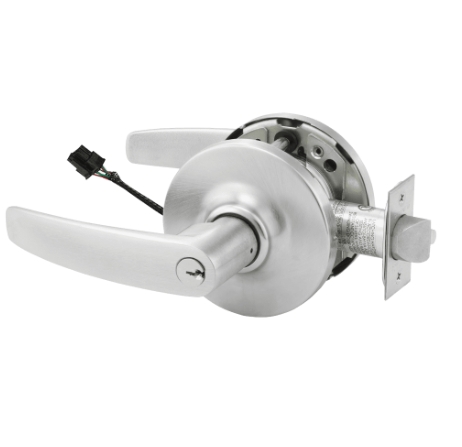
About this item
If you searched "2 position keyed switch"- this is it. The BEST 1W7P4626 is a key-operated electrical switch with two active positions (2 o'clock and 10 o'clock), dual SPDT contacts, maintained action, and BEST interchangeable core compatibility so it keys right into your existing BEST lock system.
What This Switch Actually Does
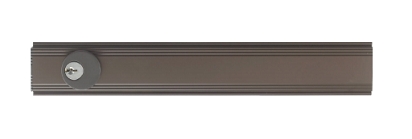
It's a lock cylinder with switch contacts built into the back. You insert a key, turn it to one of two positions, and it switches electrical circuits. That's the whole concept. The key controls the switch state the same way it controls a lock- without the right key, the switch can't be turned.
The two active positions on the 1W7P4626 are at 2 o'clock (clockwise from vertical) and 10 o'clock (counterclockwise from vertical). At 12 o'clock, the switch is neutral and the key can be removed. Here's the important part: the key can only come out at 12 o'clock. If the switch is at 2 or 10, the key stays in. That's a built-in security feature- it prevents someone from leaving a circuit energized and walking away with the key, because they'd have to return the switch to neutral before the key releases.
Dual SPDT: What the Contacts Mean for Your Wiring
SPDT stands for Single Pole Double Throw. Think of it as a relay with three terminals: Common (the input), Normally Open (connects when activated), and Normally Closed (connects when at rest). When you turn the key, Common switches from Normally Closed to Normally Open.
This switch has two independent SPDT units in one body- that's the "dual 2 SPDT" designation. Six terminals total: two Commmons, two Normally Open, two Normally Closed. Each switch actuates at a different key position, giving you independent circuit control at 2 o'clock and 10 o'clock from the same key turn.
Why does this matter in practice? If you need to activate one circuit when the key turns clockwise and a different circuit when it turns counterclockwise, the 1W7P4626 handles both with a single key in a single lockset. You're not installing two separate keyswitches on the panel. One cylinder, one key, two independently switched circuits.
Maintained Action: The Switch Stays Where You Leave It
Maintained action (also called on-on) means the switch holds whatever position the key moved it to. Turn to 2 o'clock, the circuit stays energized when you release the key. The switch doesn't spring back. You have to actively turn the key to change it.
This is correct for anything that needs to hold a state- machine tool power, elevator recall, HVAC mode, lighting zone, generator transfer. Compare this to momentary action switches (on-off), where the circuit only holds while the key is being actively pushed or held. Most building automation and industrial panel applications want maintained action because the activated state needs to persist until someone consciously changes it.
Double D Cylinder: Why It Doesn't Spin
The W Series uses a Double D cylinder- the cylinder body has two flat machined faces on opposite sides. The housing has matching flats. This means the cylinder physically cannot rotate inside the housing, regardless of how much torque you apply from outside. A standard round cylinder can be spun with a pipe wrench or channel locks if someone is determined enough. The Double D geometry makes that impossible. Combined with the BEST interchangeable core, you get both key control and physical resistance to bypass at the cylinder itself.
Keying Into Your BEST System
The 1W7P4626 accepts the BEST SFIC interchangeable core, so it keys directly into any existing BEST master key system. Your maintenance staff's master key can operate the switch. Individual operators get keys cut to only their authorized positions. If you need to rekey, pull the core with a control key and install a new one- no need to replace the switch body.
Standard, Premium, and Patented cores are all compatible. Call 877-471-4870 to configure the core for your system.
Electrical Ratings
Contact rating: 30 VDC, 15 amps, resistive. Appropriate for DC control circuits up to 30 volts at 15 amps- access control panels, relay coils, signal circuits, low-voltage automation.
Horsepower rating: 1/2 HP at 125-250 VAC. Supports single-phase AC motor loads within that horsepower range on standard commercial voltages.
Operating temperature: Up to 176°F (80°C).
Before specifying, confirm your load type (resistive, inductive, or lamp), voltage, and current. Inductive loads like motors and large transformers present higher switched current demands than the rated resistive amperage- verify against BEST's derating tables for inductive loads.
Choosing the Right W Series Model
There are a lot of W Series variants. Here's the short version of how to narrow it down:
Key positions: Where do you need the active switch states to land? The 1W7P4626 is 2 and 10 o'clock. Other models use 12, 3, 5, or 9 o'clock. The positions determine the physical rotation arc and where the key points when each circuit is active.
Number of switches: Single (1W7B series) for one circuit. Dual (1W7J and 1W7P series) for two independent circuits.
Contact configuration: SPDT for one common with NO/NC switching. DPST for two poles switched together (on or off, no alternating). DPDT for two poles with NO/NC on each.
Action: Maintained (on-on, the switch holds position) vs. toggle (returns to neutral when released).
The 1W7P4626 is the right choice when you need dual SPDT maintained action with the key stopping at 2 o'clock and 10 o'clock.
Specifications
Model: BEST 1W7P4626
Series: W Series Electric Switch Lock
Switches: 2 SPDT (dual)- 6 terminals total
Action: Maintained (on-on)
Key Position 2: 2 o'clock
Key Position 3: 10 o'clock
Key Removal: 12 o'clock (neutral) only
Contact Rating: 30 VDC, 15A resistive
HP Rating: 1/2 HP, 125-250 VAC
Max Operating Temp: 176°F / 80°C
Cylinder: Double D- anti-rotation
Core: BEST SFIC interchangeable- keys into any BEST system
Terminals: Screw terminals
Mount: CAM mount, cylinder ring included
Finish: 626 Satin Chrome
Origin: USA
 Trusted Since 2001


.svg)