About this item
When architects and glaziers specify a concealed vertical rod exit device for an aluminum storefront door, the Jackson 1085 is the default. It's been the industry standard for this application since the 1970s when it replaced the earlier Jackson 885 series and became the go-to CVR panic device for narrow, medium, and wide stile aluminum storefronts. Fifty-plus years of field installations and replacement parts availability have made the 1085 the benchmark every competing CVR device gets measured against. If someone is searching "jackson 1085," they already know this is what they need. This page is where they order it.
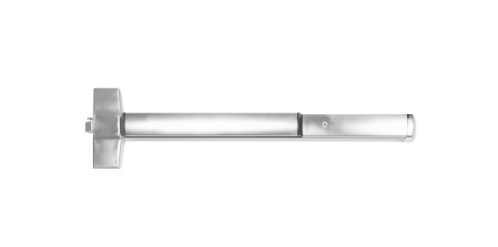
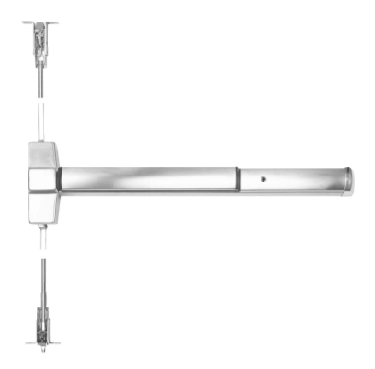
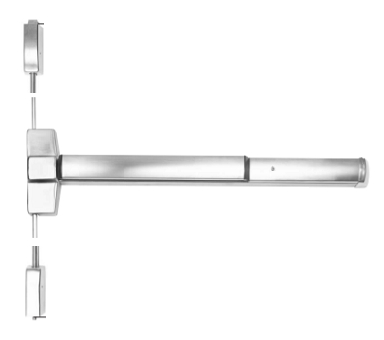
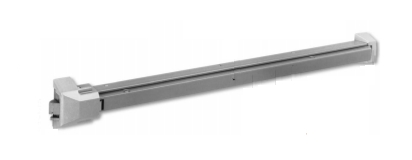
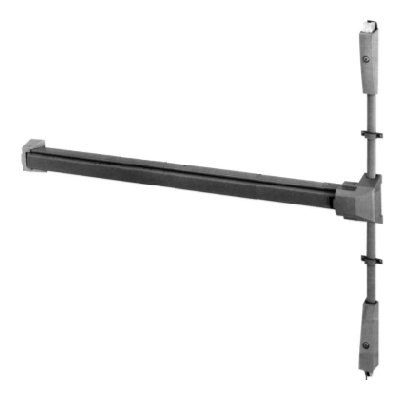
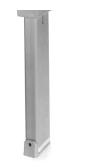
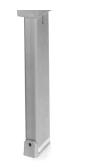
The 31-1085 is a concealed vertical rod exit device, which means both the top and bottom latching rods run inside the door stile, completely out of view. No exposed rods on the door face. No visible hardware beyond the crossbar. Overall projection from the door surface is only 2-7/8" (73mm). The concealed fastening system adds another layer of clean appearance and tamper resistance. For all commercial panic hardware and exit devices, browse our exit hardware catalog.
How the Jackson 1085 CVR Works
When someone pushes the crossbar, the mechanism simultaneously retracts the top latch into the door header and the bottom rod into the floor strike. Both latch points release in a single motion, the door opens, and both rods re-engage automatically when the door closes. The inside operation is always free: the crossbar retracts both rods regardless of any outside trim state. Non-handed design means the same device installed on left-hand or right-hand doors without modification.
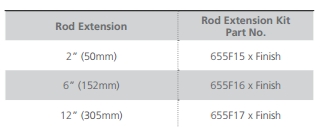
The 1085 fits 1-3/4" (44.5mm) narrow, medium, and wide stile aluminum doors, and also works on wood and hollow metal doors. The standard crossbar ships at 45" and is field-cut to match the door width. The device ships are configured for doors up to 84" (2.13m) tall. For doors taller than 84", the 12" top rod extender (CRL part 301347) or 24" top rod extender (CRL part 301348) is available as a separate accessory.
Jackson 31-1085 Technical Specifications
Series: Jackson 10 Series (1085). Type: Concealed Vertical Rod (CVR) Panic Exit Device. Function: Exit only (standard). Handing: Non-handed. Door compatibility: 1-3/4" (44.5mm) narrow, medium, and wide stile aluminum, wood, or hollow metal doors. Crossbar: Ships at 45", field-cut to fit 36" or 48" door widths. Door height: Ships for doors up to 84" (2.13m); extensions available separately. Overall projection: 2-7/8" (73mm) from door surface. Fastening: Concealed for added security. Construction: High tensile strength aluminum crossbar with stainless steel and hardened steel mechanical components. Finishes: 313 Dark Bronze Anodized, 628 Satin Aluminum Clear Anodized. Available sizes: 36" bar (fits 30" to 36" doors), 48" bar (fits 36" to 48" doors). Cylinder dogging: Optional, requires 1" mortise cylinder with Adams Rite cam plus Jackson 30-821J mounting pad (both sold separately).
1085 Parts and Replacement Components
The Jackson 1085 has a documented parts list and all major replacement components remain available. The rod and case assembly (the internal rod mechanism) is Jackson part 30915J. The mortise cylinder mounting pad for adding cylinder dogging is Jackson part 30-821J. Cylinder dogging requires a 1" mortise cylinder with an Adams Rite cam ordered separately. For lubrication of moving parts, white lithium grease is the recommended product for the internal mechanism.
The 12" top rod extender (CRL 301347) and 24" top rod extender (CRL 301348) are available for doors taller than 84". Call 877-471-4870 for parts availability and compatibility confirmation before ordering replacement components.
Why the 1085 Is Still Specified
The 1085 replaced the 885 in the 1970s because it offered better performance in the same door prep. Today it remains the standard because replacement parts are readily available, installers know the installation sequence cold, and the device still performs reliably on doors that have been in service since the original installation. On a building with existing 1085 devices, specifying a different CVR device on a replacement opening creates a parts management problem. The 1085 keeps the facility on a single platform for maintenance and future replacements.
 Trusted Since 2001


.svg)