About this item
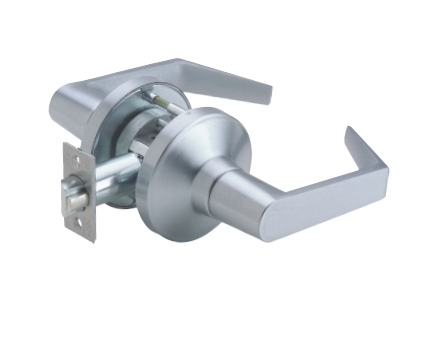
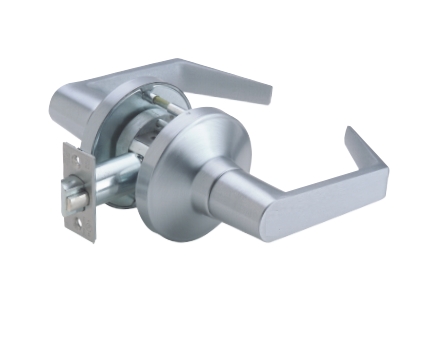
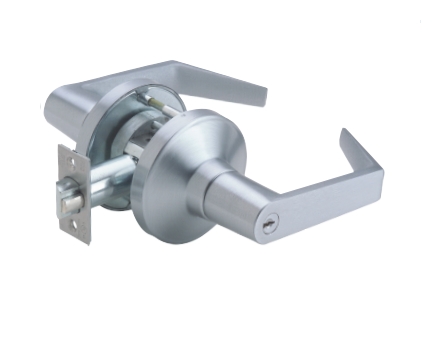
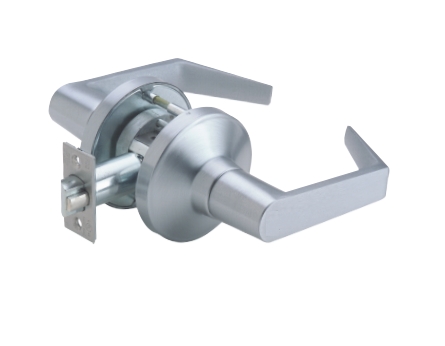
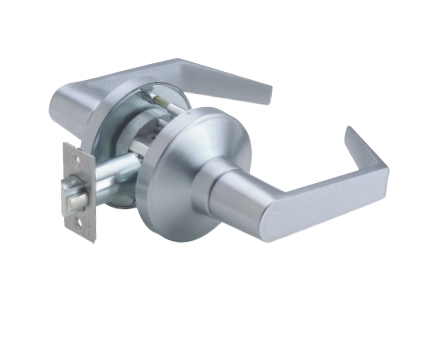
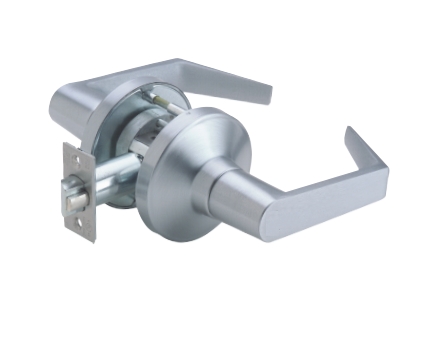
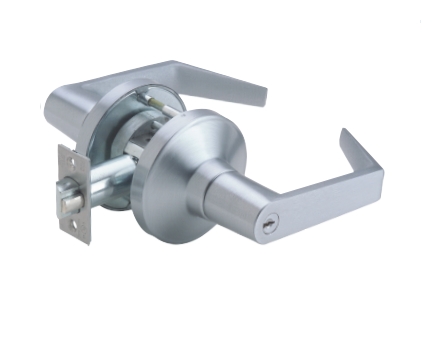
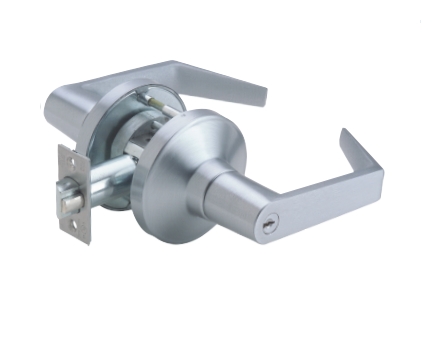
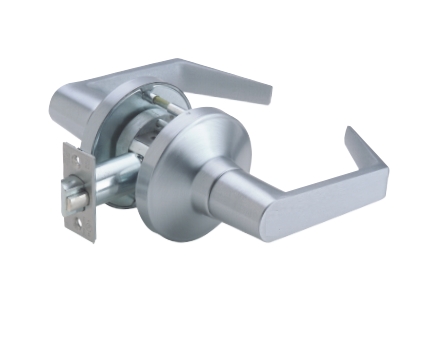
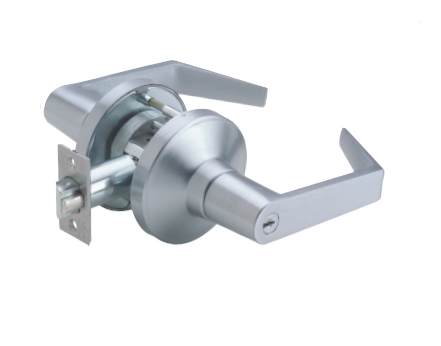
Most Grade 1 cylindrical locks are built to meet the ANSI standard. The PDQ XGT Series is built to blow past it. The XGT116 entrance lock resists over 3,000 inch-pounds of lever torque, which is four times the ANSI/BHMA Grade 1 requirement of 750 in-lbs. Its cycle tested over 3 million operations, three times the ANSI standard. It's assembled in Lancaster, PA, backed by a lifetime warranty, and approved for Florida's High Velocity Hurricane Zone. For K-12 schools, hospitals, correctional facilities, government buildings, and any high-traffic commercial environment where a standard Grade 1 lock doesn't last, the XGT116 is the specification that ends the replacement cycle.
For the complete PDQ XGT Series in all available functions, browse the PDQ XGT Series Grade 1 catalog. For all PDQ lever locks, view our PDQ lever locks selection.
Why 3,000 In-Lbs Matters in High-Abuse Environments
The ANSI Grade 1 torque resistance standard is 750 in-lbs. That's what every Grade 1 lock in the market is tested to. In a K-12 hallway, a juvenile detention facility, or a hospital emergency department where doors get kicked, leaned on, and physically forced regularly, 750 in-lbs gets consumed fast. The XGT116 withstands more than 3,000 in-lbs before any movement occurs. That's not a minor upgrade. That's the difference between a lock that needs annual replacement and one that outlasts the building's renovation cycle.
PDQ's lever design also solved a problem that clutch-lever designs create. Traditional clutch levers freewheel under attack, which sounds protective but actually rotates the lever to an angle that increases mechanical advantage and allows more force to be applied. The XGT lever stays rigid under load. The cast stainless steel spindle and 13-gauge steel anti-rotation plate absorb and redirect force rather than allowing the lever to rotate into a position of greater leverage.
PDQ XGT116 Technical Specifications
Series: PDQ XGT, Extra Heavy Duty. Grade: ANSI/BHMA A156.2, Series 4000, Grade 1. Function: ANSI F109, Entrance/Office. Torque resistance: exceeds 3,000 in-lbs (4x ANSI/BHMA Grade 1). Cycle testing: over 3 million cycles (3x ANSI/BHMA Grade 1). UL/CUL Listed: UL10C, 3-hour fire door, single doors up to 4' x 8'. ADA: compliant with ADA and ICC/ANSI 117.1. Florida HVHZ: approved, Product Approval FL 21376, design load rating ±70 PSF for single 3' x 7' doors. Country of origin: assembled in Lancaster, PA, USA. Buy American Act: meets requirements. Chassis: heavy-duty diecast. Spindle: cast stainless steel lever spindle. Anti-rotation plate: 13-gauge steel, installed on secure side. Latch throw: 2:1 latch bolt throw, 41-degree lever rotation. Available levers: Philadelphia (PHL), Boston (BSN), Miami (MIA). Available finishes: 605 US3, 606 US4, 612 US10, 613E, 622 US19, 625 US26, 626 US26D. Warranty: lifetime limited.
How the ANSI F109 Entrance Function Works
The outside lever operates freely during normal hours. When the inside push/turn button is pressed (single push), the outside lever locks and entry requires a key from outside or a turn of the inside lever to unlock. When the inside button is pushed and turned (double action), the outside lever locks and a key from outside retracts the latch but does not unlock the lever. The door remains locked for the next approach. Inside lever is always free for egress in both states.
This dual-mode locking behavior is the reason F109 is specified for office and administrative suites: single push for normal after-hours lockdown, push-and-turn for secured situations where staff doesn't want the door unlocking between key uses.
XGT vs. GT: Which One to Specify
The PDQ GT116 is the heavy-duty version with 2,100 in-lbs torque resistance and a 25-year warranty. It's the right choice for standard heavy-traffic commercial applications. The XGT116 steps up to 3,000+ in-lbs and a lifetime warranty for environments where even the GT doesn't hold up: correctional facilities, behavioral health units, K-12 common areas, and any door that sees deliberate physical abuse as a regular condition.
 Trusted Since 2001


.svg)