About this item
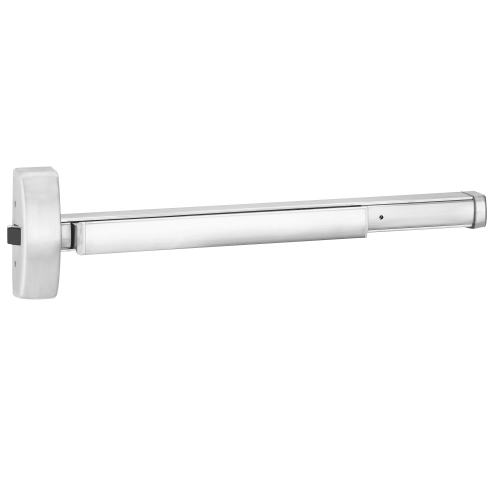
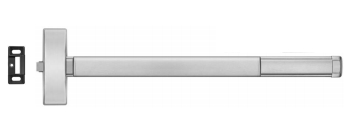
The Precision DE2103 is an Apex Touchbar rim exit device from Precision Hardware (PHI) with a delayed egress module built into the device body. It covers functions 2101, 2102, 2103, 2105, 2108, 2114, and 2115 -all in the same platform -with the DE prefix indicating the delayed egress option. If you've been searching "precision panic bars", "precision crash bar", or "precision 2103" looking for a touchbar exit device with a security delay built in, this is it. Precision is now part of dormakaba/BEST, which is why the product shows up under both Precision and PHI in different catalog systems.
What Delayed Egress Actually Does at the Door
When someone pushes on the exit device with the DE module armed, the door doesn't immediately open. The device requires that person to apply about 15 pounds of force for up to 3 seconds to initiate the delay cycle. Once that threshold is met, an irreversible process begins. A local audible alarm activates. The device counts down -15 seconds standard, 30 seconds if the Authority Having Jurisdiction has approved it. After the countdown, the device releases and functions as a standard exit device.
That process is irreversible once started. You can't stop the door from eventually opening once someone has initiated the cycle. What delayed egress does is create a controlled window -long enough for security to respond to the alarm and long enough to deter casual or impulsive unauthorized exits, but short enough to maintain safe egress compliance under the life safety codes.
The remote monitoring feature sends a signal when someone initiates an egress attempt, so security staff don't have to be stationed at the door to know an exit is happening. That signal can integrate with a building access control system or trigger a remote annunciator.
Code Compliance: When You Can Use a Delayed Egress Device
The Precision DE2103 meets NFPA 101 Special Locking Arrangement requirements and IBC Special Egress-Control Device requirements. But delayed egress isn't permitted everywhere. The building needs to be equipped throughout with an automatic sprinkler system or an approved automatic smoke or heat detection system. Occupancy restrictions apply -delayed egress is generally not permitted in Assembly (Group A), Educational (Group E), or High Hazard occupancies. Recent editions of the IBC (2018 and later) have expanded where it's allowed, including limited educational applications with fewer than 50 occupants.
One delayed egress lock is typically permitted per egress path. For I-2 and I-3 institutional occupancies (healthcare, detention), up to two delayed egress devices may be permitted per egress path with a combined maximum delay of 30 seconds. Confirm with your local Authority Having Jurisdiction for the adopted code edition in your jurisdiction before specifying.
The device releases immediately -no delay -when the fire alarm or automatic sprinkler system activates. Required door signage reads: "PUSH UNTIL ALARM SOUNDS. DOOR CAN BE OPENED IN 15 SECONDS." The device must be manually re-armed after each activation. Power failure defaults to free egress.
Wiring and Power Requirements
The DE module is self-contained in the exit device body -the alarm, delay timer, and release mechanism are all integrated. You'll need to wire the unit to a power supply and run connections for the remote monitoring output if your project uses that feature. Precision's 2000 Series installation instructions include the wiring diagram with terminal assignments for power input, alarm output, fire alarm release input, and remote monitoring signal. Download the 2200 Series installation instructions from Precision's documentation library for the full wiring schematic before roughing in conduit.
Specifications
Model: Precision DE2103 (also covers 2101, 2102, 2105, 2108, 2114, 2115 with DE option)
Series: Precision Apex 2000 Series
Device Type: Rim exit device, touchbar style
Option: DE -Delayed Egress, self-contained
Delay: 15 or 30 seconds (AHJ approval required for 30)
Initiation: 15 lb force applied up to 3 seconds
Alarm: Local audible, integral
Remote Monitoring: Yes, alert output for security integration
Fire Release: Immediate release on sprinkler/fire alarm activation
Power Failure: Fails to free egress
Grade: ANSI/BHMA A156.3 Grade 1
UL Listings: Panic Hardware and Fire Exit Hardware
Latchbolt: 3/4" throw, stainless steel, deadlocking
Code Compliance: NFPA 101, IBC, IFC
Re-arm: Manual reset required after each activation
American Locksets has stocked Precision Hardware and PHI exit devices since 2001.
 Trusted Since 2001


.svg)