About this item
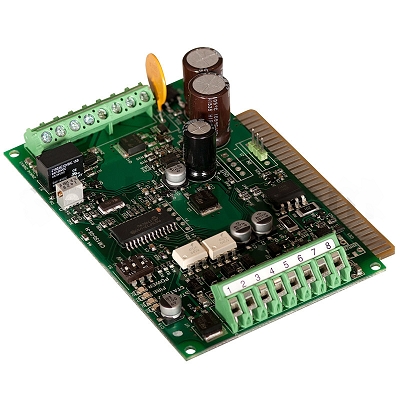
If you're installing Precision ELR exit devices, this power supply isn't optional. The ELR152 is the unit that actually makes the electric latch retraction function work. Without it, your ELR devices are just mechanical exit devices with an unused solenoid. The ELR152 ships with two CM150-08 control modules already installed, so it's ready to drive two ELR devices straight out of the box.
What "ELR" Actually Means and Why the Power Supply Matters
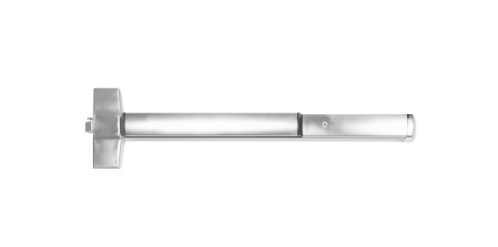
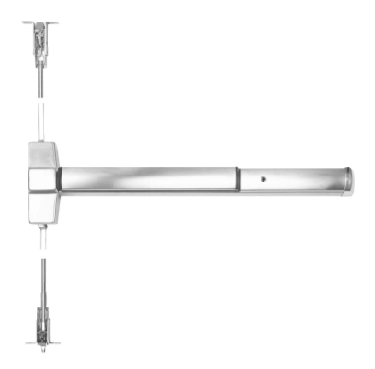
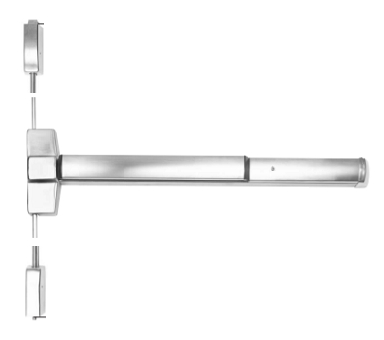
Electric Latch Retraction lets you retract the latchbolt on a Precision Apex 2000 Series exit device remotely- a signal comes in from your access control panel or a push-to-exit button, the latch pulls back, and the door goes into free push-pull mode. When the signal stops, the latch resets and the door locks again. That's the basic operation.
The ELR150 Series power supply is what converts wall power into the right voltage and current for that solenoid to fire. It also houses the control modules that handle the logic- timing, fire alarm override, and input signal processing. You can't run an ELR device without it.
The ELR150 Series: Which Model You Actually Need
The whole ELR150 family runs off the same chassis. What changes is how many control modules come pre-installed:
ELR150: Motherboard only, no modules. Buy this if you're building your own configuration from scratch.
ELR151: One module for one device.
ELR152 (this one): Two modules for two devices.
ELR153: Three modules for three devices.
ELR154: Four modules for four devices, which maxes out the motherboard.
The ELR152 is the most common choice for a pair of ELR doors- a double door opening with one device on each leaf, for example.
What the CM150-08 Control Module Does
Each CM150-08 card handles exactly one ELR device. It sits in the motherboard slot and does a few important things.
The time delay feature is probably the most useful. You can set it from 0 to 4 minutes- so a momentary push-to-exit input can hold the door unlatched for however long your application needs, without requiring a continuous signal from the access control panel. That's set by a user-selectable adjustment on the module itself.
The fire alarm terminal is equally critical for rated openings. Each module has a red LED (D3) that blinks when a fire alarm signal interrupts the circuit. The module immediately kills its output, which means the door goes back to normal latched operation even mid-retraction. That's the behavior you need for fire-rated openings.
On the electrical side, input is 5 to 24 VDC or VAC with about 0.005 Amp draw. The output fires a 4.75 Amp current pulse for up to 2 seconds to throw the solenoid, then drops to a continuous 3.6 VDC at 0.8 Amp to hold it.
Power Supply Specs
The ELR152 chassis is UL Listed for Class II output and conforms to UL 294 for access control applications. It runs on 115 Volts AC at 1 Amp, with a user-selectable switch to flip it to 230 Volt for international applications or specific code requirements.
Circuit breakers protect the motherboard. An LED on the front confirms the supply is live. The enclosure has a keyed cylinder on the cabinet door so the modules and wiring aren't accessible to anyone without the key.
If you need battery backup, the BT150-07 backup card drops into the chassis as an add-on. Additional CM150-08 modules are available separately if you want to expand from two devices to three or four on the same supply.
 Trusted Since 2001


.svg)