 Trusted Since 2001


.svg)
- Exit Hardware
- Exit Alarms
Exit Alarms
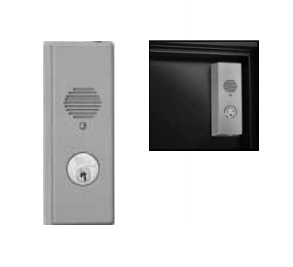
$642.00
$417.30

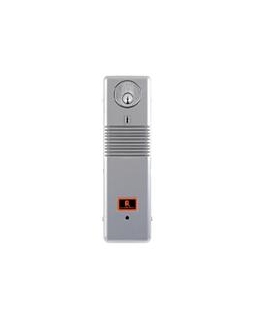
$347.81
$184.34
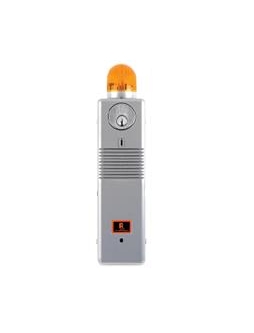
$448.54
$237.73
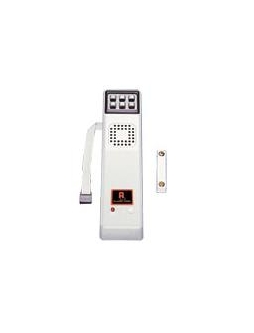
$435.05
$230.58
$553.23
$293.21
$659.28
$349.42


$1,058.00
$603.06

$366.00
$208.62
$531.00
$302.67
Exit Door Alarm vs Door Prop Alarm: Know Which One Your Opening Needs
These two terms get used interchangeably, but they do different things and specifying the wrong one creates a security gap that doesn't show up until something goes wrong.
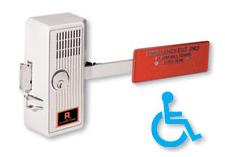
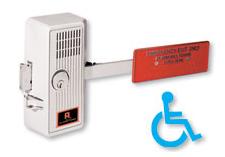
An exit alarm sounds the moment a door opens. Any movement of the door, any unauthorized push, triggers the 100dB horn immediately. There's no delay, no grace period. These are the correct specification for emergency exit doors where any unmonitored opening is a security event - fire stairs, secondary building exits, restricted access doors.
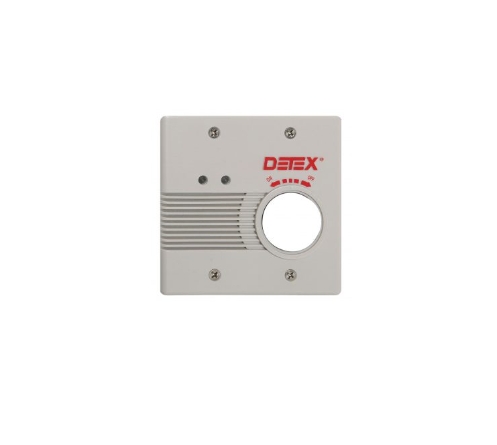
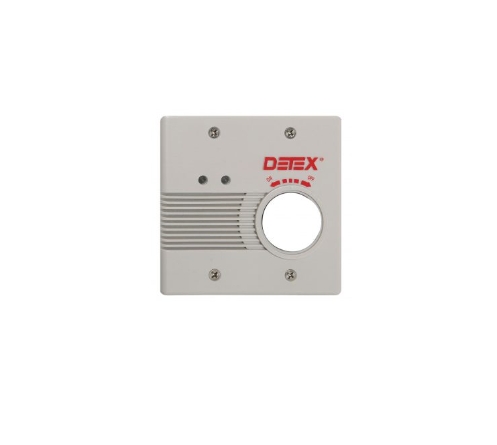
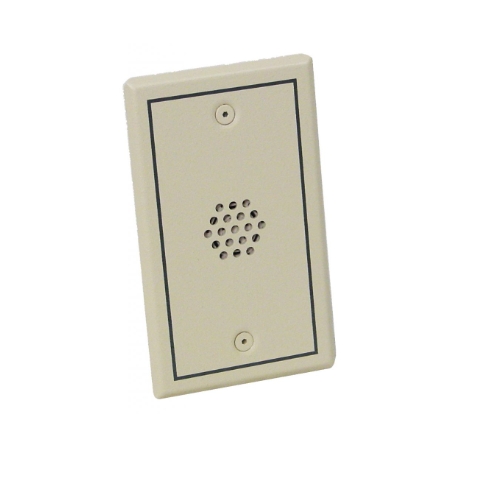
A door prop alarm works differently. It uses a magnetic contact to detect when the door has been held open past a preset time threshold, typically adjustable from 1 second to 4 minutes. The door can open and close normally without triggering the alarm. The alarm fires when the door stays open too long. These solve a different problem: employee exits left propped for convenience, deliveries that run long, or stairwell doors wedged open in warm weather. The Detex EAX-300 series is the commercial standard for door prop applications, battery-powered and field-adjustable on the delay setting.
Both types are in this catalog. Knowing which one you need before ordering saves a return.
Emergency Exit Door Alarms for Restricted and Secondary Exits
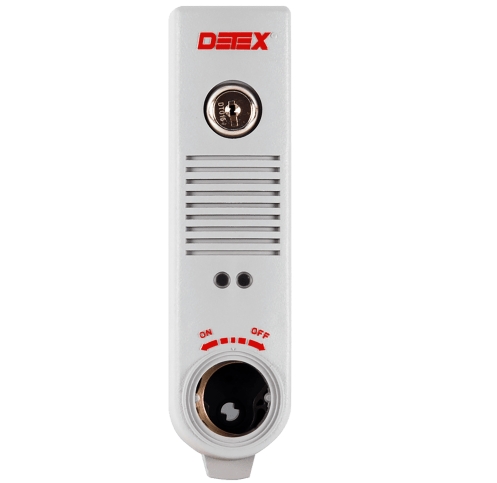
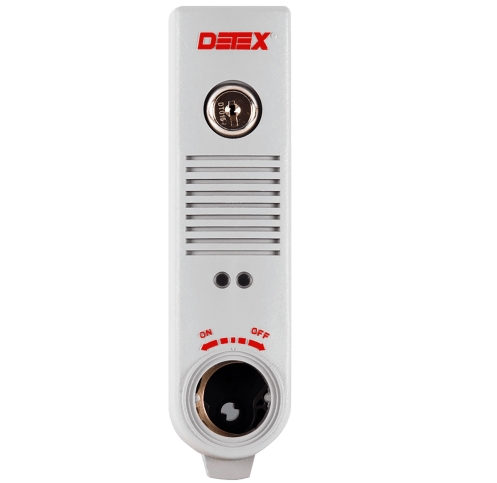
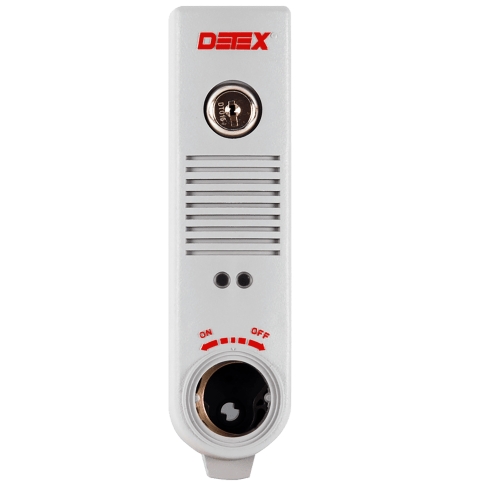
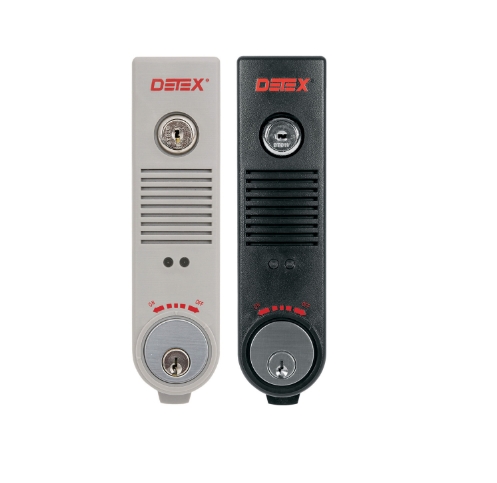
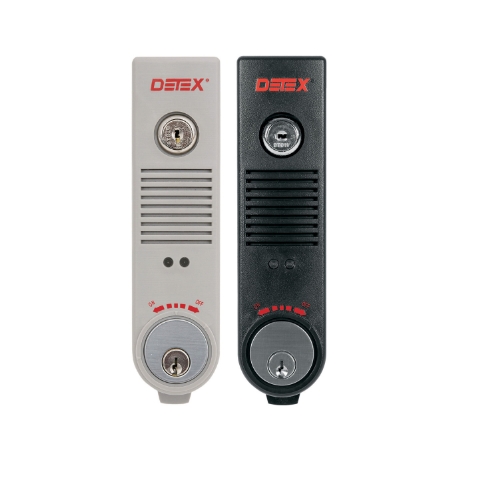
The standard commercial emergency exit door alarm is a self-contained, battery-powered unit that mounts directly on the door, detects an internal magnetic contact when the door opens, and sounds a 100dB piezo alarm. The Detex EAX-500 is the most widely installed product in this category. It runs on a 9V battery, includes a key-cylinder lock for authorized silencing, and arms itself automatically when the door closes after a bypass. No wiring to the frame, no conduit, no power supply required. It installs in under an hour on virtually any commercial door.
For doors that see regular legitimate traffic but still need monitoring, the keypad-controlled Alarm Lock PG30 is the right call. Staff enter an access code on the keypad to silence the alarm before opening the door. Unauthorized users who don't know the code trigger the alarm. This is the specification for stock rooms, pharmacy back doors, and any restricted exit where certain employees have legitimate access and others don't.
Back Door Alarm: Retail, Warehouse, and Restaurant Applications
The back door is where most commercial theft and unauthorized entry happens. A receiving door, a kitchen exit, a warehouse loading entry - these doors get propped, bypassed, and left unmonitored constantly. An exit alarm on a back door doesn't stop someone from walking out, but it makes unauthorized use immediately visible to anyone nearby and creates enough urgency that most incidents get cut short.
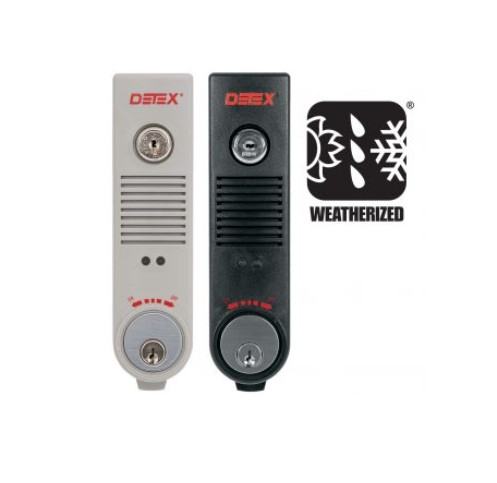
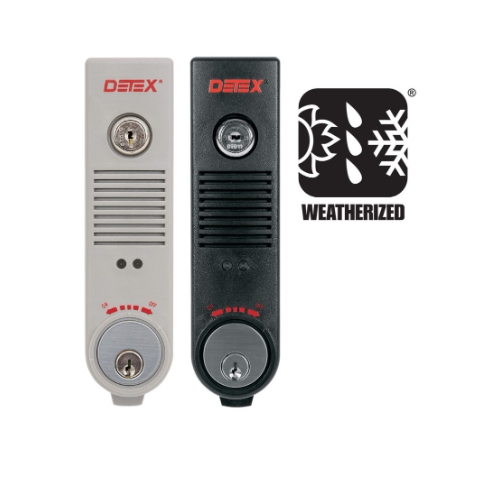
Battery-powered alarms are the practical choice for back door applications because running conduit to a back-of-house door is often expensive relative to the installation. The Detex EAX-500W weatherized version handles exterior-rated back door installations where temperature variation and moisture would shorten a standard battery alarm's service life. The Alarm Lock Sirenlock 250WP is the weatherized alternative with a padlock-style deadbolt integrated into the alarm body, combining locking and alarm functions in a single unit.
Features That Separate the Right Commercial Exit Alarm from the Wrong One
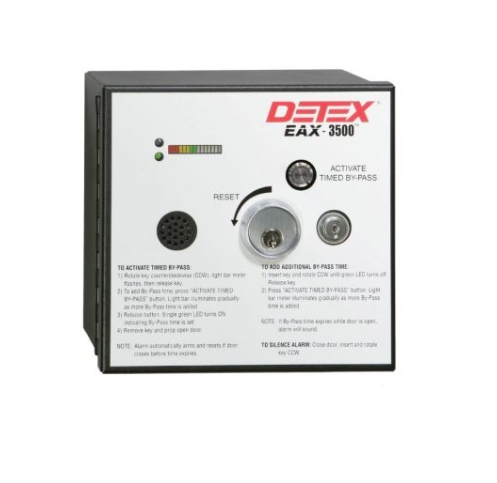
Timed bypass. The Detex EAX-3500 allows a programmable bypass window, typically used on loading dock doors where a legitimate delivery needs the door open for an extended period. The bypass silences the alarm for a set time, then automatically rearms when the window closes. Without this feature, a standard exit alarm on a loading dock creates constant false trips during business hours.
Strobe light. The Alarm Lock PG21MSS adds a strobe to the 100dB horn. This is the specification for noisy industrial environments where the horn alone might not be heard, and for ADA-compliant installations in facilities serving hearing-impaired occupants.
Remote alarm. The Detex CS-940S and CS-2940S place the alarm horn away from the door, at a security desk or reception area, rather than at the door itself. The door contact still detects the opening, but the audible alert goes to wherever staff are positioned to respond. This is useful in facilities where a door-mounted alarm would be quickly silenced by the person using the door before staff could respond.
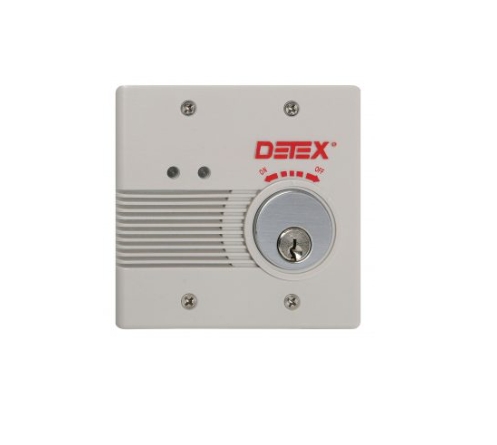
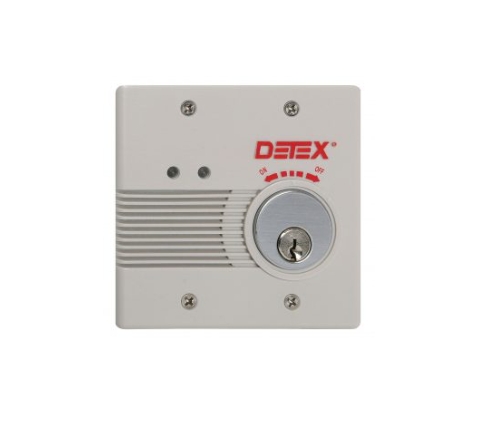
Hardwired AC/DC power. The Detex EAX-2500 series connects to building power rather than a battery, which eliminates battery replacement maintenance on high-traffic monitored doors and provides a consistent power source for alarms that need to be integrated into a building management or security panel.
Compliance Context for Emergency Exit Door Alarms
Exit alarms are not a substitute for a code-compliant exit device on a required egress door. IBC and NFPA 101 govern what's required at exits, and those requirements are about egress function, not alarm function. An exit alarm is an added security layer on top of compliant hardware, not a replacement for it. On a fire-rated door assembly, confirm any alarm hardware is listed for use on fire doors before installation.