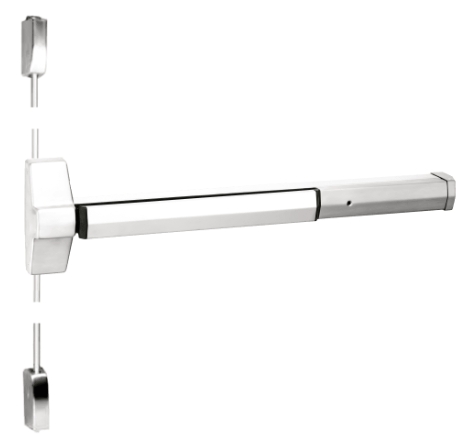
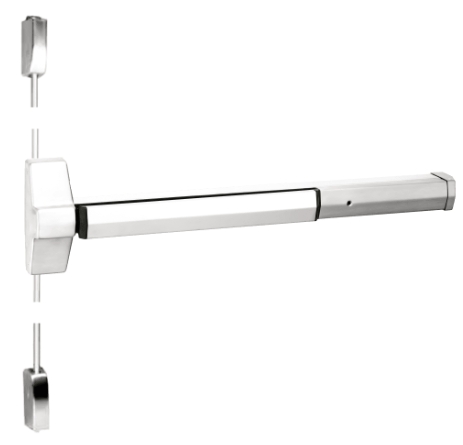
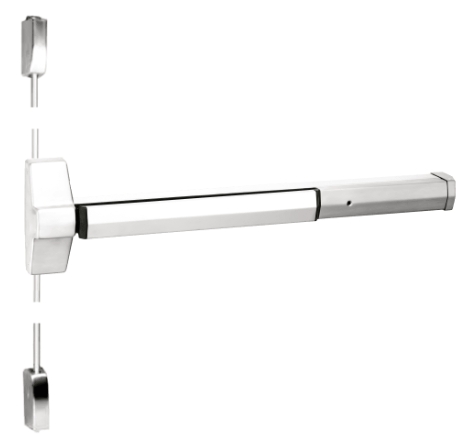
About this item
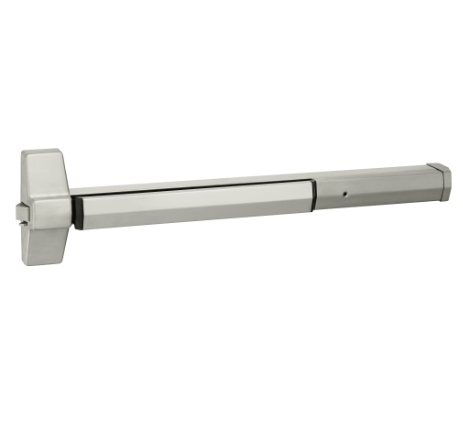
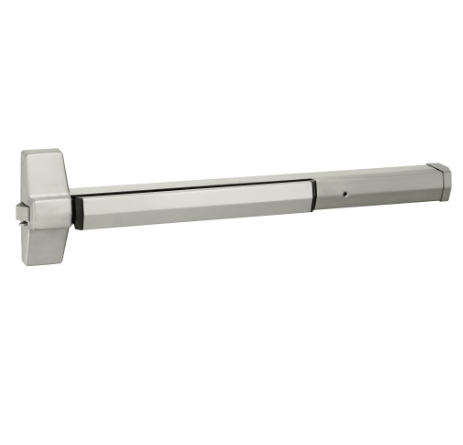
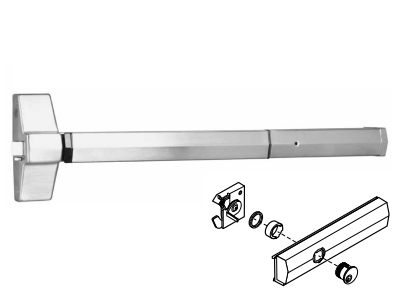
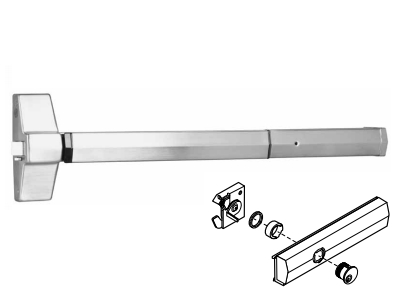
The Accentra 7120 is the concealed vertical rod (CVR) exit device from Yale's 7000 Series for metal doors - sized for the 36-inch bar covering 30 to 36-inch door widths. If you searched "7120 part number specifications", "ai71020", "ai71120", "7120m", or "yale 7220 exit device" - this is the product. Accentra is the current brand name for Yale commercial hardware under ASSA ABLOY. The 7120 model number, rod system, and strike specifications carry forward directly from the Yale catalog.
What Concealed Vertical Rod Means and Why It Matters
Exit devices come in three primary body types - rim, surface vertical rod (SVR), and concealed vertical rod (CVR). The CVR format used in the 7120 is the specification for door applications where a clean outside appearance is required and where two-point door latching - top and bottom - is needed for security or fire code compliance.
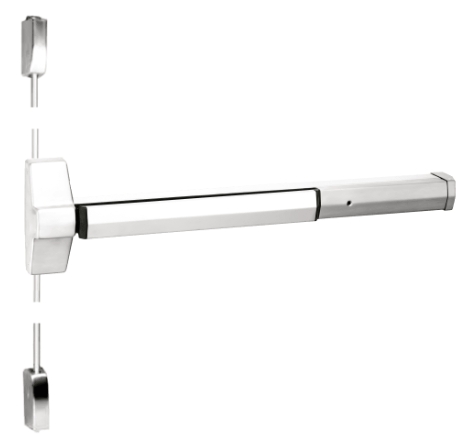
In a rim exit device, the latch is surface-mounted and engages a single strike on the frame jamb. In a surface vertical rod device, external rods run up and down the outside face of the door connecting to strikes at the top of the door frame and the floor. In the 7120 CVR, the vertical rods run inside the door stile - completely hidden from both sides - connecting the crossbar mechanism to a top frame strike and a bottom floor strike. The door exterior looks clean. No rods are visible on either face. Two-point latching is achieved without the visual impact of external hardware.
This is why CVR devices are specified on high-visibility doors in office lobbies, hospital corridors, institutional entry doors, and architectural applications where the door's visual profile matters.
Metal Doors Only: Why the 7120 Has This Restriction
The 7120 is rated for metal doors only. The CVR rods run through pockets inside the door stile. Metal doors - hollow metal doors - have stile pockets specifically designed to accept vertical rod hardware. Wood doors do not have compatible internal pockets for concealed rods. If your door is wood, the correct specification is a surface vertical rod device or a rim device, not the 7120 CVR. Confirm door construction before ordering.
7120 Part Number Specifications: Model Code Decoded
If you searched "7120 part number specifications", "ai71020", "ai71120", or "7120m" - these are catalog and distributor reference formats for the Yale 7120 CVR exit device series.
AI71020 and AI71120 are internal distributor catalog reference strings - the AI prefix appears in some commercial hardware dealer databases as a product category code prepended to the base model number. The underlying device is the same Accentra 7120 CVR exit device described here.
7120M refers to the motor latch retraction (MLR) variant - an electrified version of the 7120 where the latch can be retracted by an electric signal from an access control system, electric strike, or remote release switch. The standard 7120 is mechanical only. The 7120M (also referenced as 7120MLR in some catalog strings) adds the motor-driven latch retraction. If your specification calls for electric release, confirm the M or MELR suffix when ordering.
Yale 7220 vs 7120: Surface Rod vs Concealed Rod
If you searched "yale 7220 exit device" - the 7220 is the surface vertical rod device from the same 7000 Series. The functional difference is where the rods run. The 7220 SVR runs rods on the surface of the door, visible on the push face. The 7120 CVR runs rods concealed inside the door stile. Both provide two-point latching. The 7220 SVR works on both metal and wood doors. The 7120 CVR works on metal doors only. Specify CVR when the door is metal and aesthetics require concealed hardware. Specify SVR when the door is wood or surface rods are acceptable.
Handed: How to Specify the Correct Hand
The 7120 is handed - unlike rim exit devices which are non-handed, the CVR device requires you to specify hand at order. The device is field reversible, but you must specify the correct hand when ordering. Hand is determined from the outside of the door: if the hinges are on the right, it is right-hand. If the hinges are on the left, it is left-hand. Confirm door hand before placing the order. Receiving the wrong-handed device and needing to return is the most common ordering error on CVR products.
Two-Point Latching: Top and Bottom Bolt Details
The 7120 latches at both the top of the door frame and the bottom floor - that is what two-point latching means. The top latchbolt is a 3/4-inch pullman-type with automatic deadlatching - it retracts when the crossbar is pushed and deadlocks when the door closes. The bottom latch is a 5/8-inch deadbolt that is held retracted during the door swing cycle and extends when the door closes to engage the floor strike. The rods connecting the crossbar to both latches are 1/2-inch OD telescoping tubular rods that adjust to door height during installation.
Top strike is the roller-type 791 - for both panic and fire configurations. Bottom strike is the flush-mounted 790 for standard floor threshold applications, with the optional 794 floor strike available for threshold opening applications.
Fire Rated Version and Height Limits
The standard 7120 (panic listed) adjusts to standard door height up to 8 feet (244cm) with device centerline at 39-15/16 inches from the floor. Rod extensions allow heights up to 10 feet on panic-listed applications.
The 7120F is the fire rated version with UL/cUL fire exit hardware listing (GXHX/GXHX7) - for use on fire-rated doors up to 3 hours for 8-by-8-foot pairs and 1-1/2 hours for 8-by-10-foot pairs. For fire-rated applications requiring a CVR device on doors taller than 8 feet, the 7160F is the correct specification. The 7120F is not listed for fire-rated openings taller than 8 feet - specify 7160F for those applications.
Compatible Trim Series
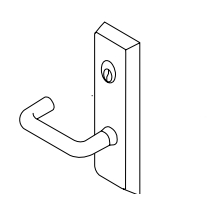
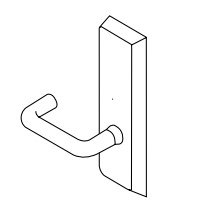
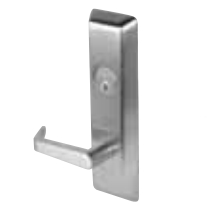
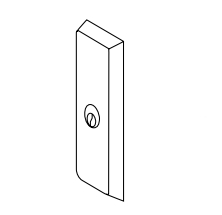
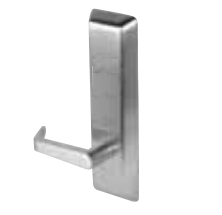
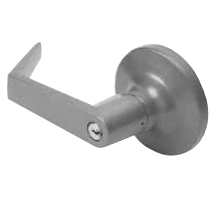
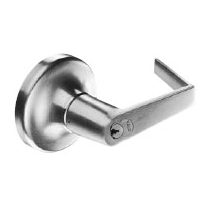
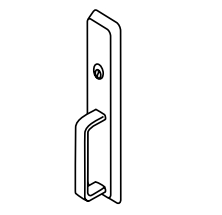
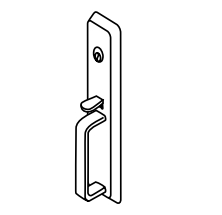
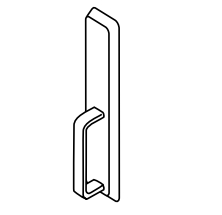
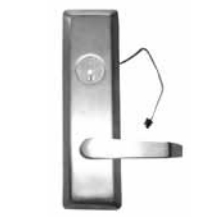
Outside trim for the 7120 is ordered separately. Compatible trim families include: 620F series escutcheon trim, 630F series pull/thumbpiece trim, 680F series offset pull trim, and 540F series rose trim. Trim function selection determines outside access - specify the trim function (exit only, nightlatch, classroom, storeroom, passage) based on the access control requirement of the opening.
Specifications
Model: Accentra 7120 / Yale 7120
Former Brand: Yale (now Accentra, ASSA ABLOY)
Type: Concealed vertical rod (CVR) exit device
Series: 7000 Series
Bar Length: 36" for doors 30" to 36" wide
48" Version: 7120-48 for doors 36-1/2" to 48" wide
Door Type: Metal (hollow metal) doors only
Door Height: Standard to 8' adjustable; rod extensions to 10' (panic); 7160F for fire-rated over 8'
Door Thickness: 1-3/4" standard; 2" and 2-1/4" optional (specify when ordering)
Handing: Handed - specify RH or LH at order; field reversible
Top Latchbolt: 3/4" pullman-type with automatic deadlatching
Bottom Bolt: 5/8" deadbolt, held retracted during door swing
Vertical Rods: 1/2" OD telescoping tubular rods
Top Strike: Roller type 791
Bottom Strike: Flush mounted 790; optional 794 for threshold openings
Fire Rated Version: 7120F (UL GXHX/GXHX7, 3-hour)
Electrified Version: 7120M/7120MELR (motor latch retraction)
ANSI/BHMA: Grade 1
UL/cUL Panic: FVSR/FVSR7
Trim: Less trim - order separately from 620F, 630F, 680F, or 540F series
American Locksets has stocked Accentra and Yale 7000 Series exit devices since 2001.