 Trusted Since 2001


.svg)
- Exit Hardware
Exit Hardware
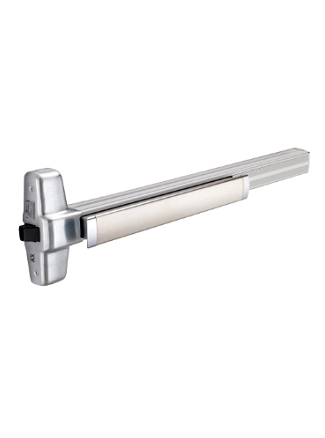
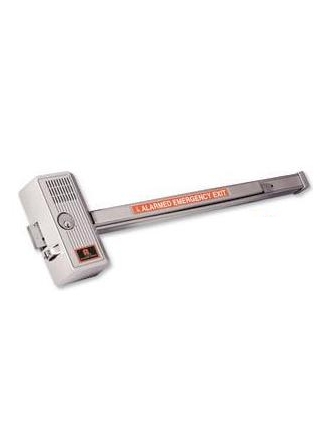
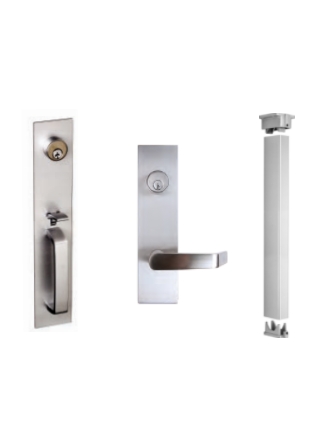
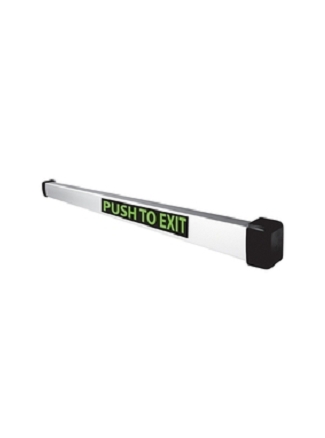
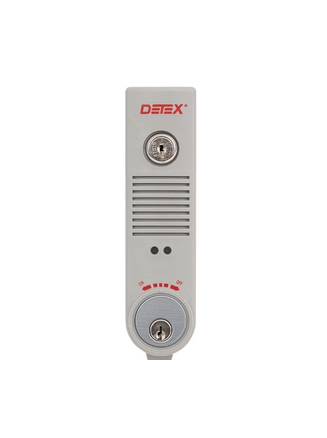
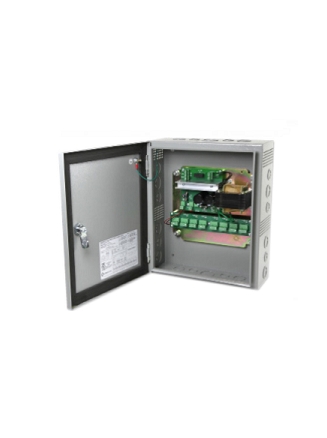
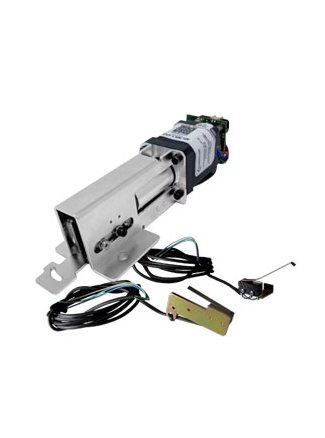
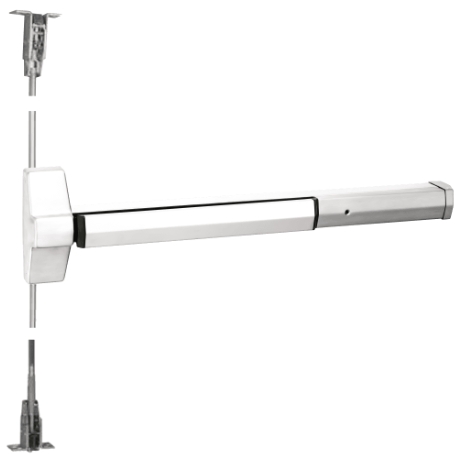
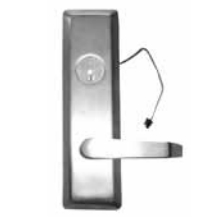
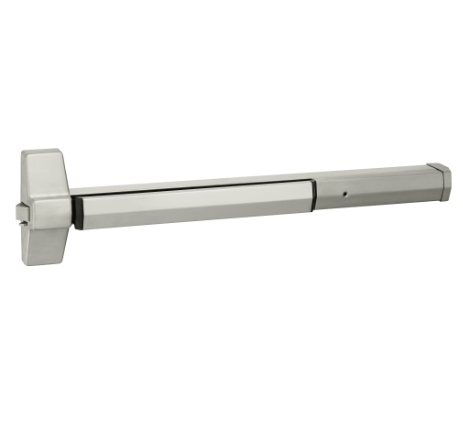
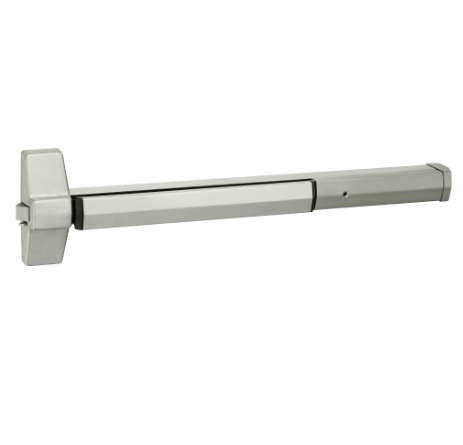
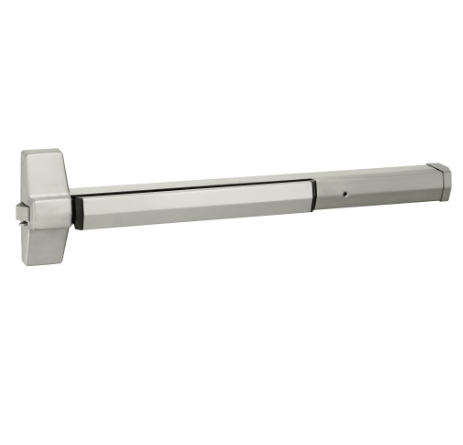
We stock panic exit devices, alarmed exit devices, exit device trims, exit alarms, exit device kits, and power supplies from Von Duprin, Sargent, Falcon, Corbin Russwin, PHI Precision, Adams Rite, and Detex in all configurations and function codes.


$2,862.52
$1,603.01
$662.81
$384.43

$662.81
$384.43
$742.17
$430.46
$888.03
$515.06
$967.40
$561.09
$1,017.80
$590.32
$1,097.17
$636.36
$1,243.03
$720.96
$752.90
$436.68

$555.56
$311.11
$555.56
$311.11
$803.30
$449.85
$803.30
$449.85
$358.22
$200.60
$555.56
$311.11
$1,890.82
$1,058.86
$1,890.82
$1,058.86
$2,418.49
$1,354.35
$2,497.85
$1,398.80

$2,688.76
$1,505.71
$2,768.12
$1,550.15
$3,808.45
$2,132.73
$2,566.49
$1,437.23
$2,645.86
$1,481.68
$3,240.02
$1,814.41
$3,319.39
$1,858.86
$3,525.31
$1,974.17
$3,604.67
$2,018.62
$3,348.35
$1,875.08
$3,427.71
$1,919.52
Does Your Door Actually Need Panic Hardware by Code?
IBC Section 1010.1.9 requires panic hardware on doors serving 50 or more occupants in assembly, educational, and high-hazard occupancies. NFPA 101 Section 7.2.1.7 applies the same requirement in jurisdictions that adopt the Life Safety Code. ADA Section 404.2.7 limits operating force to 5 pounds on accessible egress routes. Before specifying exit hardware, confirm the occupancy load and the occupancy classification. A corridor door serving 20 people doesn't trigger the IBC panic hardware requirement. A main building exit in a school almost always does.
What Counts as an 'Assembly Occupancy' Under IBC?
Assembly occupancy under IBC Chapter 3 includes places of worship, auditoriums, theaters, restaurants, and any space used for assembly with an occupant load of 50 or more. If you're unsure whether a specific room or building qualifies, the AHJ makes the final call. Don't assume an open-plan office is not assembly occupancy if it has a conference room that seats 70. Get the occupancy classification confirmed before the hardware schedule is drafted.
What's the Difference Between Rim, SVR, CVR, and Mortise Exit Devices?
Rim: Single Doors
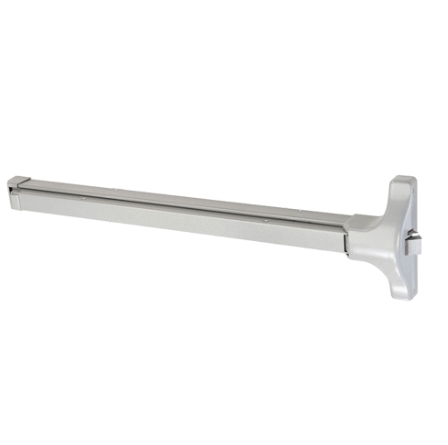
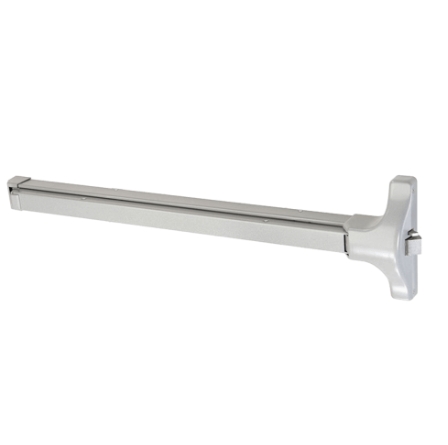
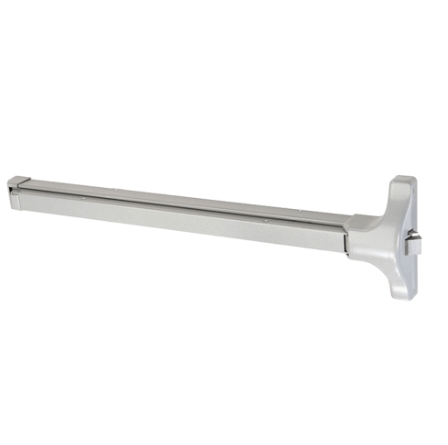
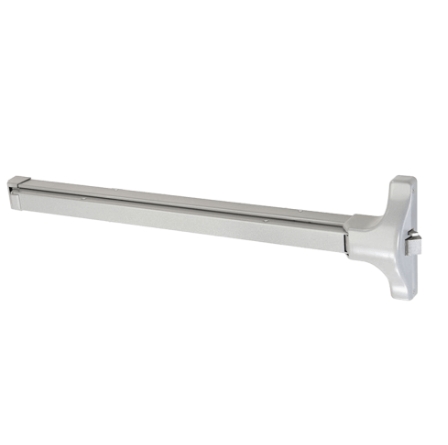
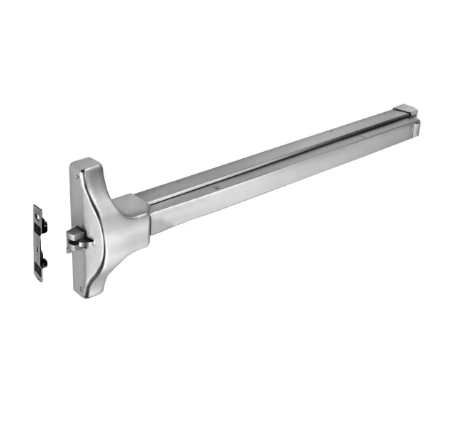
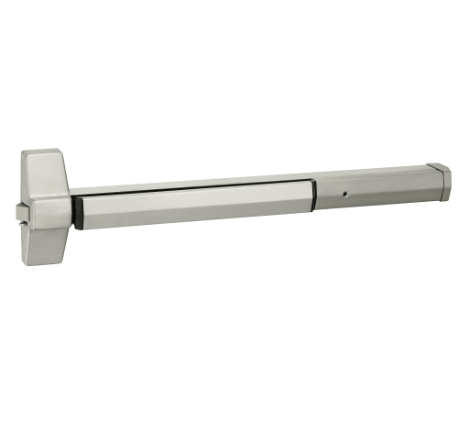
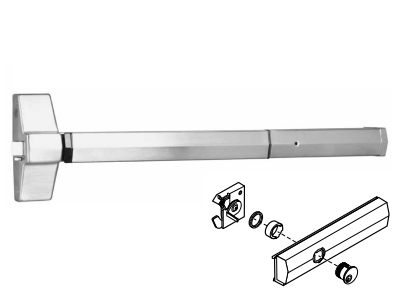
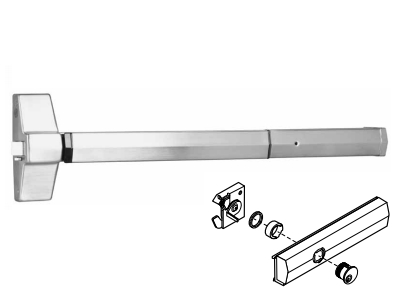
Rim exit devices are the standard for single exterior commercial doors. The device body mounts on the door face. The latch engages a strike on the door frame. Non-handed. The most commonly stocked type. Von Duprin 99 Series rim and Sargent 8800 Series rim are the institutional benchmarks.
SVR and CVR: Paired Doors Without a Mullion
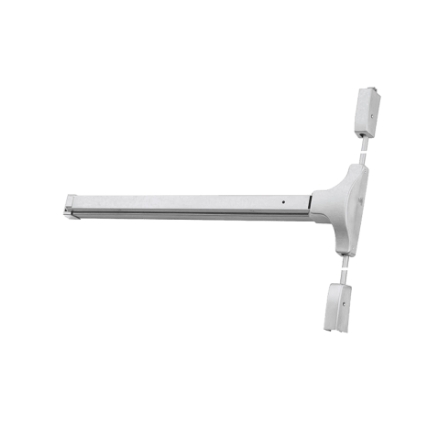
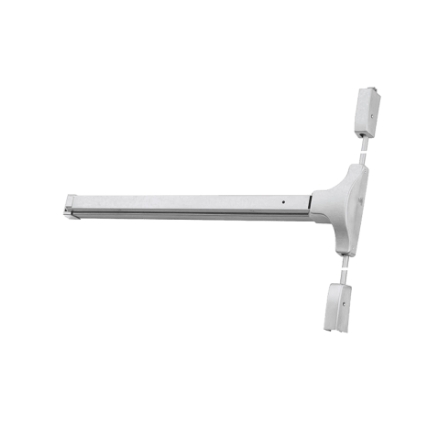
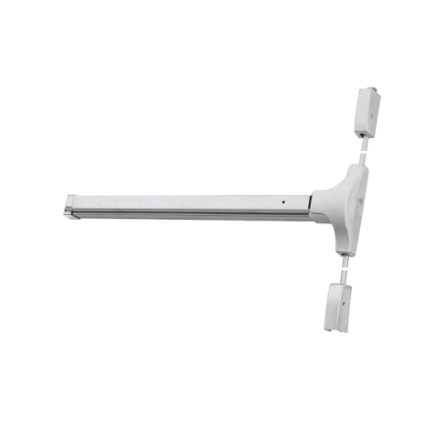
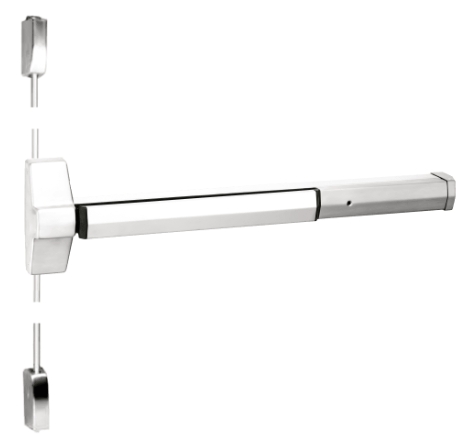
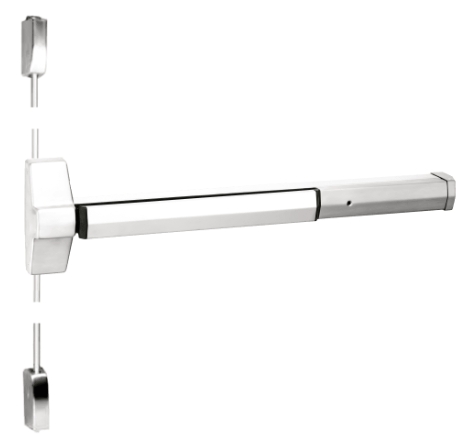
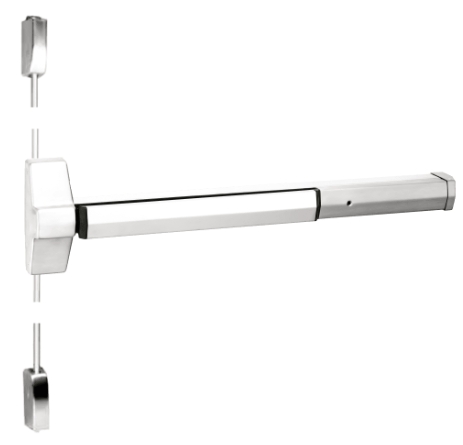
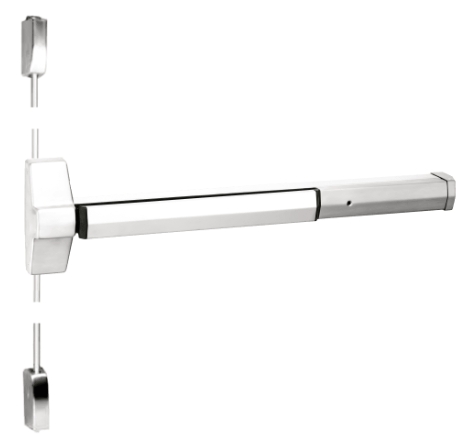
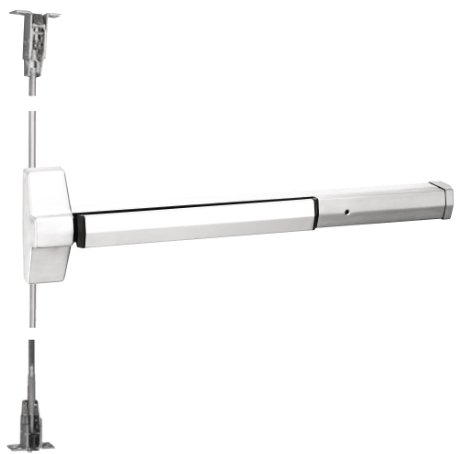
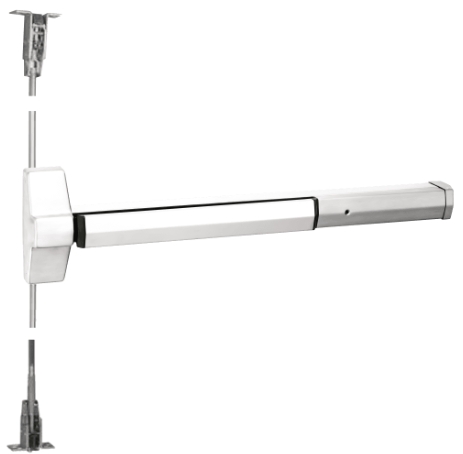
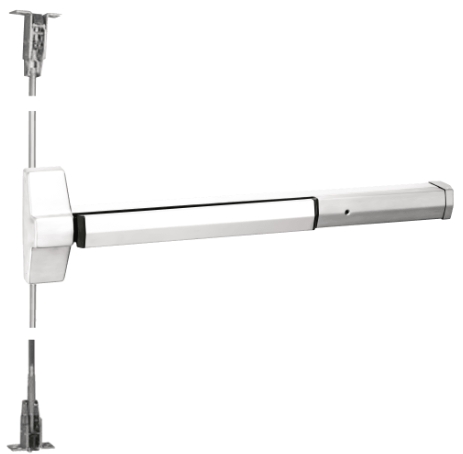
Surface vertical rod (SVR) devices add head and floor latching rods for three-point latching on the inactive leaf of paired doors without a center mullion. The rods are visible on the door surface. Concealed vertical rod (CVR) devices route the rods inside the door for a cleaner appearance. SVR is faster to install and works with most standard hollow metal doors. CVR requires internal door prep, either factory-cut or field-prepped, and adds installation time and cost.
Mortise: Primary Entries Needing Key-Controlled Access
Mortise exit devices integrate a full mortise lock with the push bar function. The outside trim provides key-controlled access. Use mortise exit devices on primary building entries where the door needs to provide panic egress from inside and credential-based keyed entry from outside, without a separate lockset on the door.
Is Standard Panic Hardware the Same as Fire Exit Hardware?
No. Standard panic hardware carries a UL 305 listing. It meets the panic hardware test standard. It can be mechanically dogged, which holds the push bar depressed so the door operates as a push-pull without using the panic bar. Fire exit hardware carries both UL 305 and UL 10C Positive Pressure listing. It's tested for use on fire-rated door assemblies. Mechanical dogging is prohibited on fire doors under NFPA 80 because fire-rated doors must positively latch when closed. On a fire door that needs push-pull traffic during business hours, specify electric dogging tied to the fire alarm panel. Ordering standard panic hardware for a fire-rated door is a specification error that an AHJ will catch during inspection.